9 Warning Signs Your Cutting Board Is Contaminating Your Food

Most people replace a cutting board when it looks bad, not when it needs replacing. Those aren’t the same thing.
A board can look rough and still be perfectly usable. Another can look nearly normal while holding moisture and food residue where a sponge never reaches.
Go grab your board. This works better if you’re looking at it while you read.
Everything here applies to wood, plastic, and composite boards, with notes where they differ. Some signs are purely cosmetic, and we’ll say so rather than send you shopping.
9 checks, counting down to the one that usually explains most of the others.
9. Surface Discoloration From Old Stains
Beet juice, turmeric, berries, red sauce. Most stains are exactly what they look like: color sitting in the surface fibers, with no bearing on whether the board is clean.

On end grain, your knife slips between the wood fibers instead of slicing across them, so it's easier on blades and the surface wears more slowly. Ours is 1¾ inches of solid acacia with a juice groove and finger grips, preconditioned with mineral oil and ready to use. See the details.
See the board, now $119Regularly $179 · Arrives gift-wrapped in butcher paperThe tell is texture. If the stained area is smooth and feels like the rest of the board, it’s cosmetic, and if it feels rough, raised, or slightly sunken, that spot is worth watching.
On plastic boards, heavy staining usually tracks with heavy scoring, since color settles into the grooves. In that case the grooves are what matter, not the stain.
Quick Facts
How to check: run your fingers across the stained area
Severity: cosmetic, usually
Next step: nothing, or a salt-and-lemon scrub on wood if it bothers you

8. A Persistent Sour or Musty Smell
A board that smells like onions an hour after use is normal. One that smells faintly sour or musty right after a proper wash is telling you something.
That kind of smell usually means moisture has worked into the material and isn’t drying out between uses. Damp material is where bacteria can grow beyond the reach of a quick wipe-down.
Give it one thorough clean first: hot soapy water, a salt-and-lemon scrub for wood, and a full dry standing on edge. If the smell is back within a day or two, the problem runs deeper than the surface.
Quick Facts
How to check: smell it after washing and drying, not right after prep
Severity: watch closely
Next step: deep clean once, and retire it if the smell returns
7. Warping or an Uneven Surface
Set the board on a flat counter and press down on each corner. If it rocks, it has warped.
Keep Reading
If this one is your kind of read:
→ 19 Ways to Make Your Wood Cutting Board Last a Lifetime
→ 8 Wood Cutting Board Mistakes That Are Ruining Yours Right Now
Here’s the expectation check: warping on its own isn’t strong evidence of contamination. It does mean the board absorbed and lost water unevenly at some point, so it’s worth looking harder at the other signs on this list.
The more immediate problem is stability, since a board that shifts under a knife is a slip hazard. Our guide to restoring versus replacing a board covers when a warp can be fixed and when it can’t.
Quick Facts
How to check: press each corner on a flat counter
Severity: moderate, and more a safety issue than a hygiene one
Next step: check the other signs, then decide whether to restore
6. Visible Mold, Even a Small Spot
Fuzzy patches, dark speckling along a seam, or a greenish tinge at an edge all mean the board has been sitting damp longer than it should.
On solid wood, a tiny first-time spot caught early can sometimes be scrubbed and sanded out. On laminated, composite, or deeply scored plastic boards, visible mold on top often means more has settled underneath, and replacing is usually the cautious call.
The habit behind it is almost always storage, like stacking a board before it’s dry or leaving it flat in a damp sink. Our rundown of common board mistakes covers the usual culprits.
Quick Facts
How to check: look along seams, edges, and the underside
Severity: high
Next step: retire it, unless it’s a tiny surface spot on solid wood
5. Cloudy or Hazy Patches on Plastic Boards
Clear and colored plastic boards often develop a cloudy, almost frosted look in high-use areas. That haze is thousands of tiny scratches catching light differently from the smooth plastic around them.
While You're Here
Plastic-Free Kitchen Swaps: What to Replace First
Most plastic-free kitchen lists treat every swap as equally urgent. A reusable straw and a glass leftover container end up side by...
Each scratch is a small spot where moisture and food residue can sit out of a sponge’s reach. Research on plastic boards has also generally found that knife scoring releases small plastic fragments, with amounts varying by board and technique.
Light haze on its own is mild. Haze that comes with grooves you can feel means the surface is wearing through, and our guide to telling whether a board is shedding plastic walks through the full check.
Quick Facts
How to check: tilt the board under a light and look for frosted patches
Severity: mild alone, higher when paired with deep grooves
Next step: move on to the fingernail test in sign #4
One More Thing: Raw meat is where board condition matters most. Many food-safety sources suggest a separate board for raw meat, and a scored or damaged surface is much harder to clean thoroughly after that job than a smooth one.
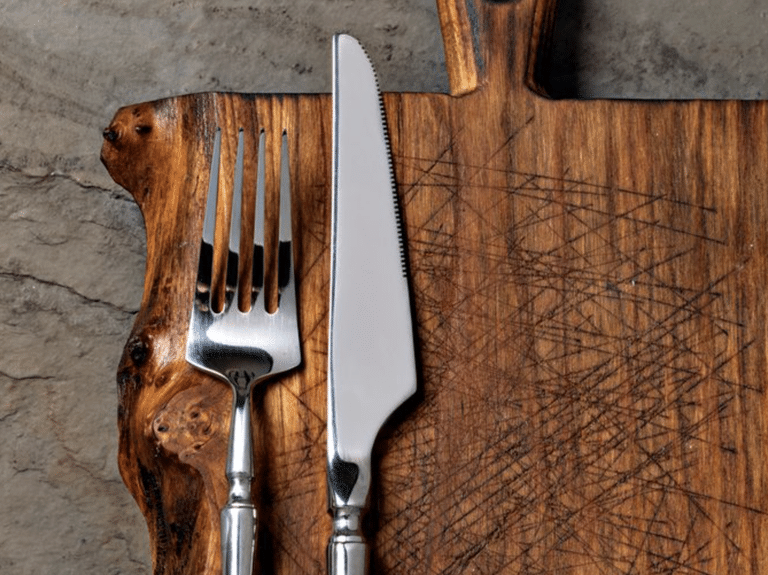
4. Deep Grooves You Can Feel With a Fingernail
Drag a fingernail across the area where you usually chop. Shallow marks that don’t catch your nail are normal wear on any board.
Grooves deep enough to catch the nail are a different story. Those channels hold moisture and food bits below what soap and a sponge can reach, which matters most after raw meat.
On wood, deep grooves can often be sanded out. On plastic, sanding isn’t practical at home, so heavily grooved plastic boards are generally due for replacement.

Jonathan grew up in New Jersey until his family moved to Germany, where he spent his youth in old-world butcher shops and French markets and learned that the best meals happen around a shared table. HardwoodChef started with one idea: make the board at the center of those moments.
Unlike plastic, it has nothing to shed into your food. Unlike glass or bamboo, its end grain is easy on your knives. And at nearly two inches thick, it’s sturdy enough to carve on and good-looking enough to serve straight from the board.
“Food brings people together. I wanted to make something worthy of sitting in the middle of it.”
Read Jonathan’s storyQuick Facts
How to check: fingernail test across the main chopping area
Severity: moderate to high
Next step: sand it if it’s wood, replace it if it’s plastic
3. Soft or Spongy Spots
Press firmly with your thumb across different areas of the board. A healthy board feels uniformly firm everywhere.
A spot that gives under pressure usually means water has started breaking down the material from inside. That softened area tends to stay damp longer than the rest, which makes it a likely place for bacteria to linger.
Cleaning and sanding can’t reach this one, since the problem sits below the surface.
Quick Facts
How to check: thumb pressure across the board, especially edges and dark patches
Severity: high
Next step: retire it
2. Cracks That Run Below the Surface
Hairline surface marks are usually fine and often close up as the board dries. A crack with visible depth that stays open after drying belongs in another category.
Anything that lets liquid and food particles seep down inside, out of a sponge’s reach, is generally considered a bigger hygiene risk than surface wear. A flashlight held low across the board makes these much easier to spot.
Dig Deeper
How to Choose the Perfect Salad Bowl: Size, Material & Style Guide
Salad bowls don't get the buying-guide attention that cutting boards or cookware do. That's a little odd, since the wrong one causes...
On composite and bamboo boards, check the glue lines too. Separation along a seam behaves a lot like a crack.
Quick Facts
How to check: low-angle flashlight across the surface, plus a look along any seams
Severity: high
Next step: retire it if the crack stays open once the board is dry
1. It Never Fully Dries Between Uses
This is the sign that explains most of the others. Smell, softness, mold, and warping usually start with a board that stays wet too long.
After washing, towel it off and stand it on edge. A typical board should feel dry to the touch within a few hours and even a thick end-grain board by the next day, so if yours still feels damp after a full day, water is getting in faster than it gets out.
A board that dries quickly and fully gives bacteria very little to work with between uses. Most of that comes down to habits like towel drying, upright storage, and regular oiling, all covered in our habits that keep a board going for decades.
Material matters too. A well-oiled hardwood board tends to shed surface water instead of soaking it up, and thick end-grain construction, like the acacia boards we make at HardwoodChef, tends to stay stable through daily washing. Our wood, plastic, and bamboo comparison covers how each material handles moisture.
Readers Can't Stop Opening These
★ 21 Holiday Charcuterie Board Themes for Every Occasion
★ 10 Toxic Kitchen Habits You Didn’t Know You Had
★ 31 Everyday Items Leaking Microplastics in Your Home Right Now
If a board fails this test along with two or three other signs here, it’s time for a new one. Our guide to choosing a board covers what to look for.
Quick Facts
How to check: wash, towel dry, stand on edge, and check it after a day
Severity: high, and usually the root cause
Next step: fix the drying habits, or retire the board if damage has set in
Reading the Results
Not every sign here carries the same weight. Stains and light haze are mostly cosmetic, and warping is more of a stability problem than a hygiene one.
A smell that survives a deep clean, deep grooves, soft spots, mold, open cracks, and a board that stays damp are the ones that point to real trouble. If your board shows two or more of those, replacing it is the sensible call.
If you only do a few things: run this check once a month, dry your board on edge after every wash, and retire plastic boards once the grooves catch a fingernail.
For the routine that keeps most of these signs from showing up, our complete oiling, cleaning, and storage guide lays it out. And for the bigger picture on plastic boards, our look at what the kitchen microplastics research shows covers the material side.