The Beginner’s Guide to a Non-Toxic Kitchen, Room by Room

Most non-toxic kitchen advice throws forty things at you at once. This guide takes a different route.
It goes zone by zone, with one manageable starting point in each, a next step for when you’re ready, and a note on what can wait. Do the starting point, stop there if you like, or keep going if you’ve got momentum.
The priorities follow the conditions most often linked to plastic and coating breakdown: heat, wear, and long contact with food. Where the science is still unsettled, this guide says so rather than filling the gap with alarm.
First, What “Non-Toxic” Does and Doesn’t Mean
“Non-toxic” isn’t a regulated term on most kitchen products, so on a label it can mean almost anything. In this guide it means something narrower: less unnecessary contact between food and plastics or coatings, especially under heat and wear.
A few other labels are worth reading carefully. “PFOA-free” is common on nonstick pans, but PFOA has largely been phased out of cookware manufacturing, and most nonstick pans still use a PTFE coating.
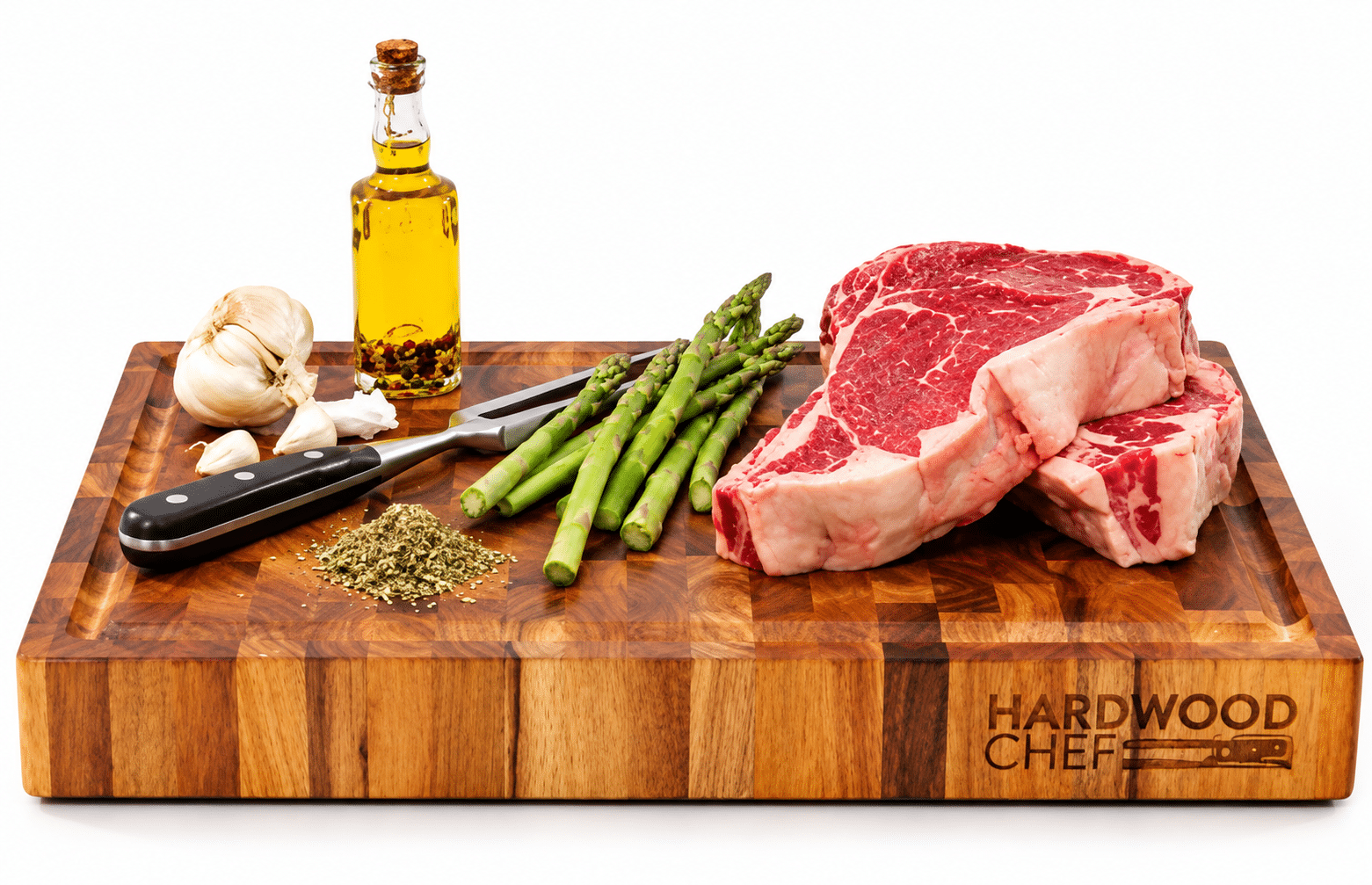
Researchers estimate plastic cutting boards can shed tens of millions of microplastic particles into food each year, and the knife grooves they build up are hard to fully clean. Our thick end grain acacia board has no plastic to shed, is gentle on your knives, and doubles as a serving board. See why it's worth switching.
See the board, now $119Regularly $179 · Arrives gift-wrapped in butcher paper“BPA-free” means one specific chemical isn’t present, though some replacement bisphenols are still being studied. And “food-grade” generally means a material is permitted for food contact, which isn’t the same as saying it never breaks down.
Zone 1: The Cooking Area
This is the highest-impact zone, since it combines heat with daily food contact more than anywhere else in the kitchen.
Start here: if you have a heavily scratched or flaking nonstick pan, retire it. Nonstick coatings are generally considered stable when intact and used at normal temperatures, but a damaged one sees more heat plus wear than almost anything else you own.
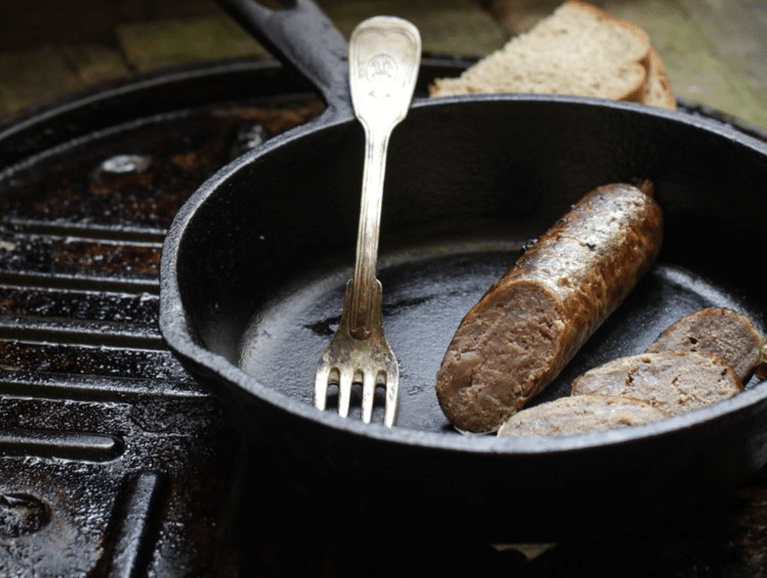
Next step, when ready: replace it with stainless steel or cast iron rather than another nonstick pan. Expect a short learning curve, but it takes the coating question off the table for good.
Ceramic-coated pans are a common middle ground. They skip PTFE, though their coatings tend to wear faster, so they usually need replacing sooner.
Lower priority: bakeware, kettles, and small appliances with plastic parts. They’re worth addressing eventually, and our rundown of kitchen tools that shed as they wear covers several of them.
Zone 2: Food Storage
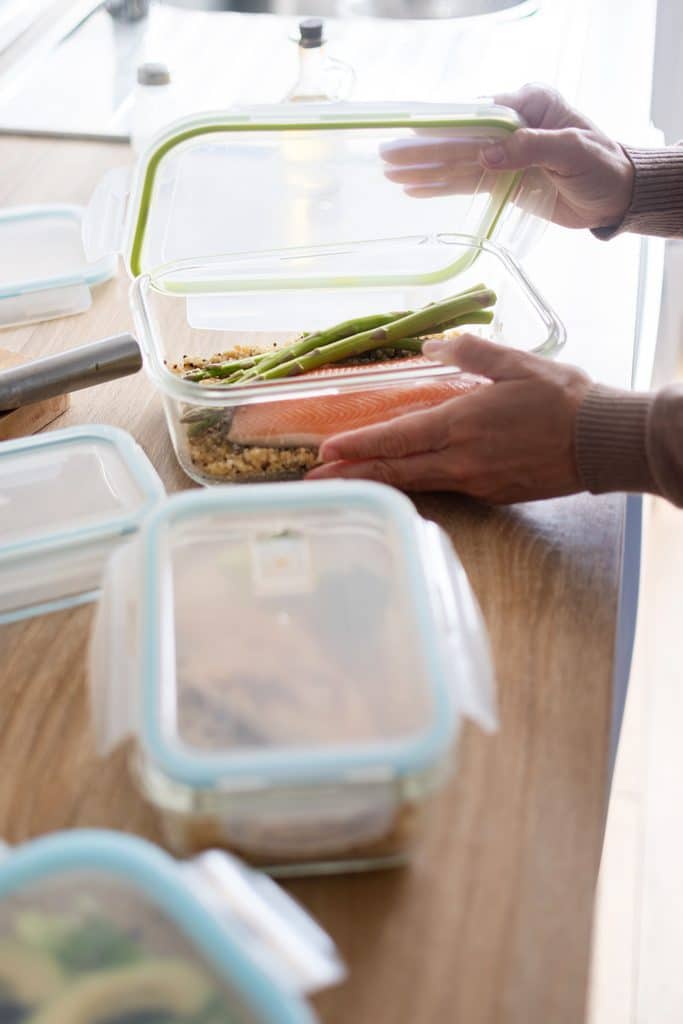
This zone mostly comes down to one behavior: what you reheat leftovers in.
Keep Reading
If this one is your kind of read:
→ The Complete Guide to Microplastics in the Kitchen: What the Research Actually Shows
→ 13 Non-Toxic Kitchen Upgrades That Cost Less Than You Think
Start here: find the two or three containers you reheat food in most often and replace just those with glass. That handles most of the heat exposure in this zone without a full cabinet overhaul.
Even before buying anything, moving leftovers to a plate or bowl before microwaving gets you most of the way there for free.
Next step: move oily and acidic leftovers, like tomato sauce or dressed salads, into glass as well. Keep plastic for dry, cold storage such as cereal, crackers, and flour, where there’s little reason to replace it first.
Lower priority: flexible snap-on lids. They wear from repeated flexing more than from heat, so keep an eye on them and take them off before microwaving.
Zone 3: Prep Surfaces
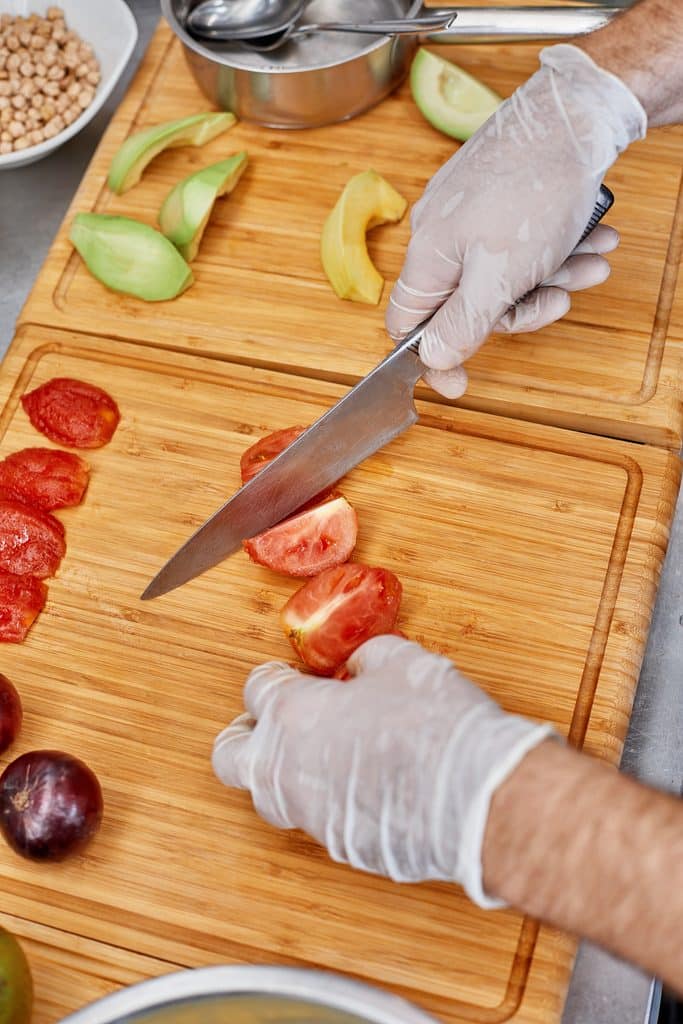
Cutting boards and prep tools live here, and this zone ties most closely to the microplastics research on kitchen tools.
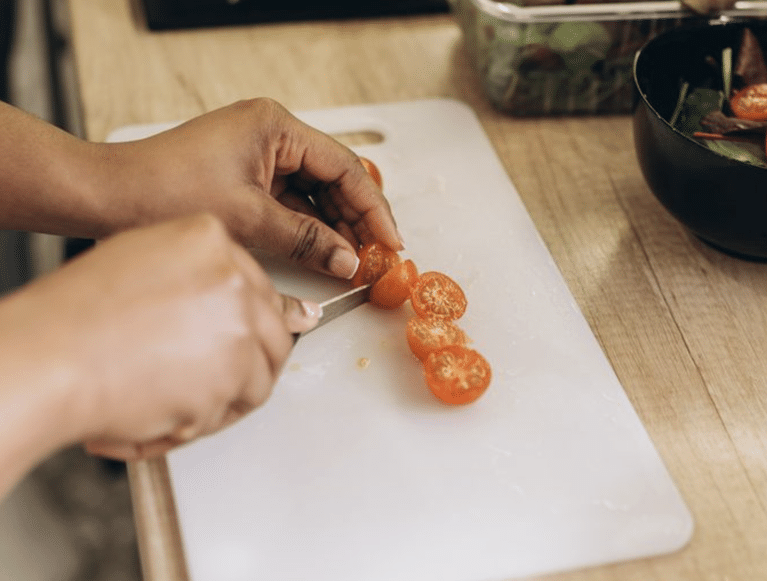
Start here: check your main cutting board for deep grooves, haze, or warping. If it’s showing real wear, it’s a priority replacement, not a someday item.
While You're Here
How to Choose the Right Wood Cutting Board for Your Kitchen
Walk down a cutting board aisle and it's a wall of options that all look roughly the same. They aren't, and the...
Not sure where yours stands? Our five-minute check for plastic boards walks through exactly what to look for and how to score it.
Next step: swap in a wood board if you’re ready for occasional oiling, or a newer, smoother plastic board if you’re not there yet. Either beats a heavily worn one.
Lower priority: spatulas, tongs, and other hand tools. Plastic spatulas used on hot pans are the exception worth bumping up, since they combine heat and scraping.
From the HardwoodChef Shop: If you’re replacing a worn plastic board, our thick acacia end-grain boards are built for daily prep and tend to last for years with hand washing and a monthly coat of oil.
Zone 4: The Drinks Station
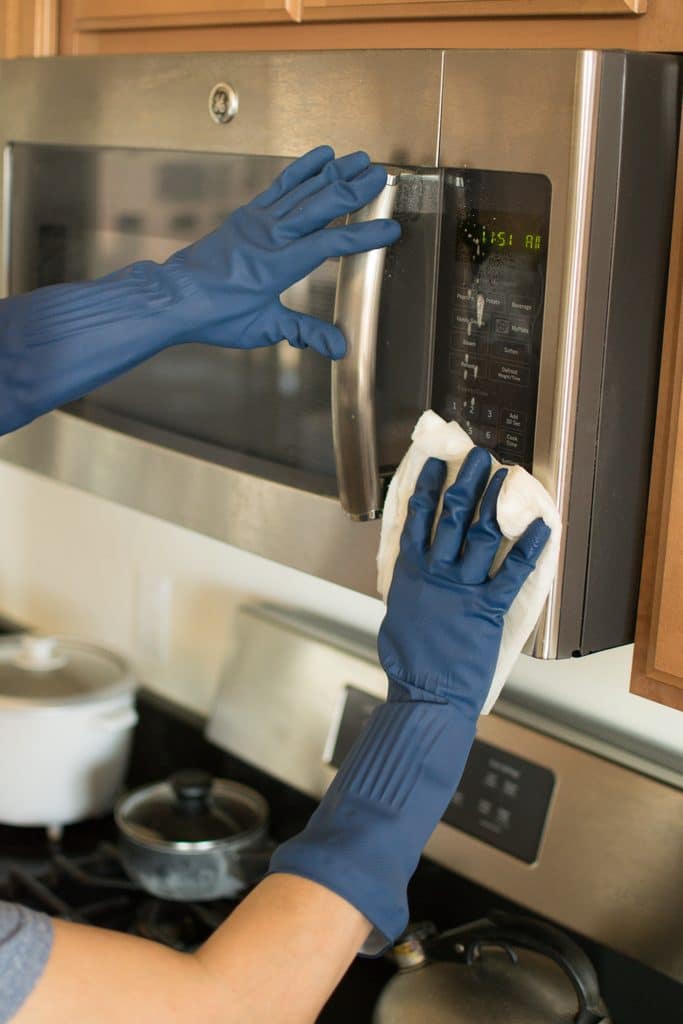
Easy to overlook, since none of it feels like cooking. It’s also where hot water meets plastic most often in a lot of homes.
Start here: if you drink tea, check if your bags are paper or silky plastic mesh. Paper bags or loose leaf in a stainless infuser are an easy, inexpensive switch.

Jonathan grew up in New Jersey until his family moved to Germany, where he spent his youth in old-world butcher shops and French markets and learned that the best meals happen around a shared table. HardwoodChef started with one idea: make the board at the center of those moments.
Unlike plastic, it has nothing to shed into your food. Unlike glass or bamboo, its end grain is easy on your knives. And at nearly two inches thick, it’s sturdy enough to carve on and good-looking enough to serve straight from the board.
“Food brings people together. I wanted to make something worthy of sitting in the middle of it.”
Read Jonathan’s storyNext step: look at the kettle and the coffee maker. Many kettles sold as stainless still have plastic lids, filters, or water windows touching the water, and drip machines run hot water through plastic every morning.
Lower priority: plastic water bottles and filter pitchers. They matter more when heat is involved, such as a bottle left in a hot car, than in everyday cold use.
Zone 5: Cleaning Supplies
Less discussed than the others, but sponges and scrub brushes are in near-constant contact with dishes.
Start here: swap synthetic scrub sponges for cellulose sponges or a natural-bristle brush. It’s inexpensive and a no-downside change.
Next step: check how your countertop spray is meant to be used. Many all-purpose cleaners call for a rinse on food-contact surfaces, which is easy to skip when you’re wiping down right before prep.
Lower priority: this zone overall. It’s worth doing, but it shouldn’t jump ahead of cooking, prep, or storage if you’re going by impact, and our list of everyday kitchen habits worth rethinking covers the behavior side.
Dig Deeper
The Complete Beginner’s Guide to Building a Charcuterie Board
Charcuterie boards look intimidating from the outside, like there's a secret ratio or technique everyone else learned somewhere. There isn't, really. This...
Zone 6: Serving and Entertaining
This zone gets the least daily contact, since most people aren’t hosting every night, but it has one common blind spot.
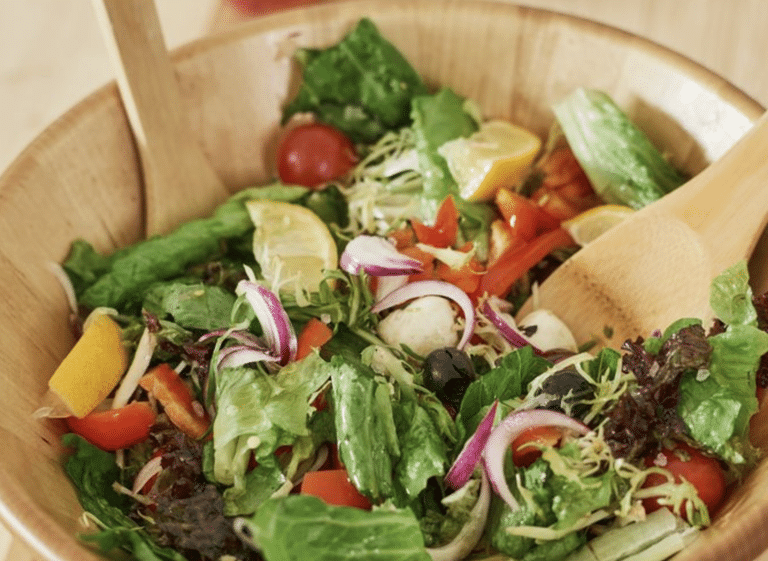
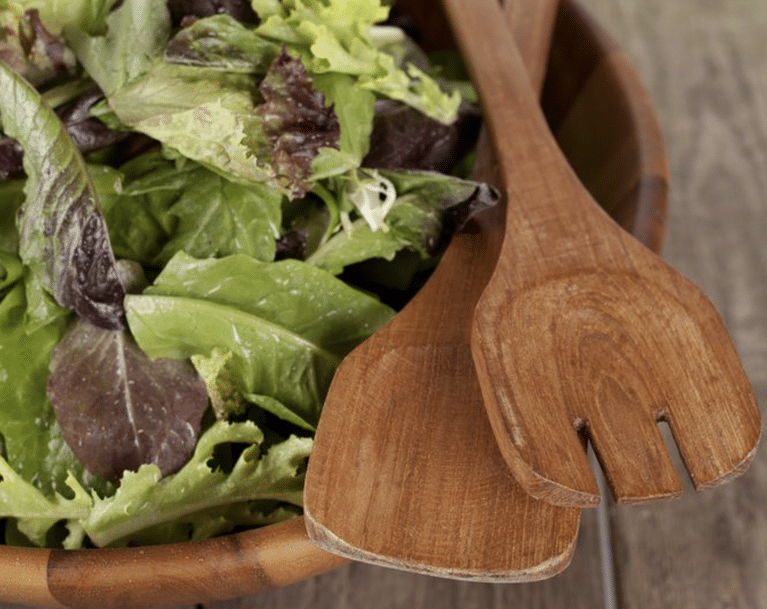
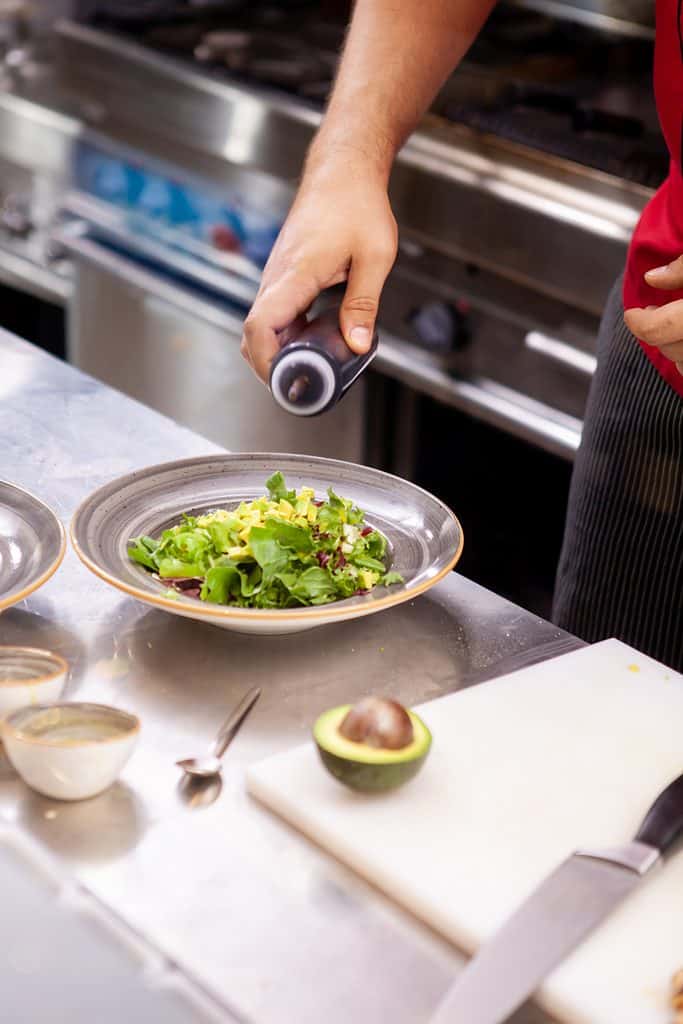
Start here: a plastic salad bowl holding an acidic, oily dressing through a long dinner party is more contact than its occasional use suggests. Wood, ceramic, or glass serving bowls handle the same job without that question.
Lower priority: everything else here. Platters, serving utensils, and party extras are more about presentation than exposure.
Worth a Look: HardwoodChef’s acacia salad and serving bowls are made for exactly that dressing-heavy job, with a quick hand wash and an occasional oiling to keep them in shape.
A Simple 30-Day Starting Plan
If a schedule helps, here’s one way to spread the starting points across a month without a big upfront spend.
Readers Can't Stop Opening These
★ 15 Charcuterie Board Ideas That’ll Steal the Show at Your Next Party
★ Plastic-Free Kitchen Swaps: What to Replace First
★ 31 Everyday Items Leaking Microplastics in Your Home Right Now
| Week | Focus | What to do | Rough cost |
|---|---|---|---|
| Week 1 | Free habit changes | Reheat on plates, take lids off in the microwave, stop cooling hot liquids in plastic, retire the most worn board or pan | $0 |
| Week 2 | Storage | Two or three glass containers for reheating | About $20 to $35 |
| Week 3 | Prep surface | Replace a heavily worn cutting board | About $10 to $250+, depending on material |
| Week 4 | Tools, drinks, and cleaning | Wood or stainless utensils, a natural-bristle brush, paper or loose-leaf tea | About $25 to $50 |
| Later | Bigger items | Cookware, kettle, and appliances as they wear out | Varies |
About these costs: ranges are rough US retail estimates as of 2026 for basic to mid-range items, and what you already own changes the total a lot. Our rundown of low-cost non-toxic upgrades breaks the prices down further.
Putting It Together
If you’re going gradually, which suits most people, the order that makes the most sense by impact is roughly cooking area, prep surfaces, storage, drinks, cleaning, and serving last.
That’s a guide, not a rule. A cutting board that’s visibly failing shouldn’t wait behind a pan that’s still in good shape just because of the order on this page.
If you only do a few things: retire anything scratched or flaking that meets heat, reheat food in glass or ceramic, and replace a deeply grooved cutting board.
For the research behind why heat and wear matter so much, our look at what the kitchen microplastics research shows covers the evidence. And for a ranked list of specific swaps, our guide to which plastic-free swaps to make first sorts them by heat, wear, and contact.