Wood vs. Plastic vs. Bamboo: A Complete Material Safety Comparison

Ask three kitchen sites which cutting board material is best and you’ll often get three confident, contradictory answers. That usually means nobody is weighing the tradeoffs side by side.
This guide compares wood, plastic, and bamboo on the things that matter in daily use: shedding and chemical questions, hygiene, durability, knife friendliness, cost over time, and care. It’s descriptive rather than a verdict, since the right pick depends on what you value.
A disclosure up front: HardwoodChef makes wood boards. That’s exactly why this guide also spells out where wood isn’t the best fit.
The Short Version
Here’s how the three materials compare at a glance, with more detail in the sections below.
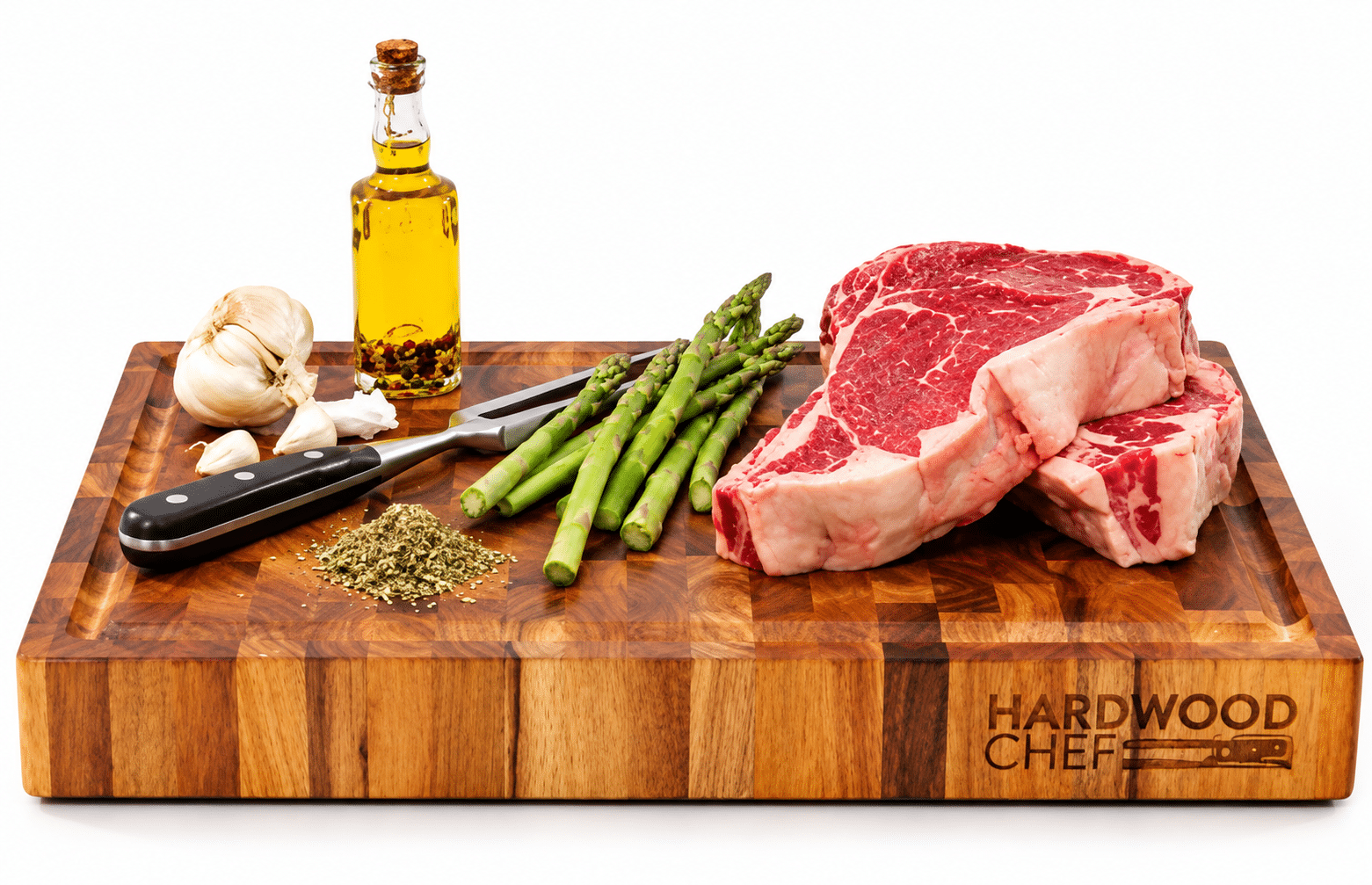
Researchers estimate plastic cutting boards can shed tens of millions of microplastic particles into food each year, and the knife grooves they build up are hard to fully clean. Our thick end grain acacia board has no plastic to shed, is gentle on your knives, and doubles as a serving board. See why it's worth switching.
See the board, now $119Regularly $179 · Arrives gift-wrapped in butcher paper| Factor | Plastic | Bamboo | Hardwood |
|---|---|---|---|
| Plastic shedding | Yes, rising with wear | Fiber, not plastic, though resin-heavy composites vary | No, wood fiber with glue at the joints |
| Hygiene | Good when smooth, harder to clean once deeply grooved | Good when intact, cracks and seams can hold residue | Good when maintained, cracks and neglect hurt it |
| Knife friendliness | Moderate | Lower, since the surface is hard | Good for edge grain, very good for end grain |
| Typical lifespan | Shortest | Middle | Longest with care |
| Rough upfront cost | About $10 to $30 | About $20 to $50 | About $40 to $250+ |
| Care | Lowest, often dishwasher-safe | Hand wash, occasional oil | Hand wash, dry promptly, monthly oil |
About this table: ratings summarize general research and common product characteristics, not testing of specific boards. Price ranges are rough US retail estimates as of 2026 for mid-size boards, and lifespans depend heavily on use and care.
Safety and Shedding
Microplastics
Plastic boards shed small plastic particles as they wear, and research has generally found that rougher, more heavily scored boards shed more than newer ones. Exact amounts vary a lot by study and method, and our overview of what the research shows so far covers what’s known and what isn’t.
Solid wood isn’t plastic, so the cutting surface doesn’t shed plastic particles. Multi-piece wood boards are glued at the joints, but what a knife wears away is wood fiber.
Bamboo is more nuanced than it’s usually presented. Most bamboo boards are thin strips laminated with adhesive, and some lower-cost bamboo products are made from fiber bound with a melamine-type resin, so how much non-bamboo material ends up in the cutting surface varies by product.
The Chemical Side
Particles are half the picture. Some plastics contain additives that can migrate into food, particularly with heat or fatty foods, though cutting boards see less heat than containers or cookware.
For bamboo, the adhesives and resins are the variable, and product details aren’t always clear about what’s used. For wood, the main thing to check is the finish: food-safe oil or an oil-and-wax blend is standard, while lacquer or varnish on a cutting surface can chip under a knife.
Hygiene
Every material can harbor bacteria once it’s damaged. Deep knife grooves in plastic, open cracks in wood, and separating seams in bamboo all give moisture and food residue places to hide.
Keep Reading
If this one is your kind of read:
→ How to Tell If Your Cutting Board Is Shedding Plastic (And What to Do About It)
Research comparing bacteria on wood and plastic boards has produced mixed results over the years. Some studies found bacteria declined faster on wood surfaces, while others found the difference depended heavily on the board’s condition and how it was cleaned.
The takeaway: maintenance matters at least as much as material. A neglected board of any kind is a bigger concern than the choice between them, and our warning signs checklist walks through what to look for.
Durability
This is where the three materials separate most.
Plastic boards generally have the shortest working life, since scoring builds up and is hard to fix at home. Many get replaced within a few years of regular use, and our five-minute check for plastic boards is a quick way to judge where yours stands.
Bamboo sits in the middle. It’s a grass rather than a wood, often as hard as or harder than many hardwoods, and it resists moisture well, though boards can crack or separate at the seams if they dry out too fast or soak too long.
A well-kept hardwood board tends to last the longest of the three, often many years and sometimes decades. End-grain construction in particular can be sanded and refreshed more than once before it’s done.
While You're Here
9 Warning Signs Your Cutting Board Is Contaminating Your Food
Most people replace a cutting board when it looks bad, not when it needs replacing. Those aren't the same thing. A board...
On lifespans: these are general patterns rather than fixed numbers. A lightly used plastic board can outlast a neglected wood one, and care habits move the timeline more than anything else.
Knife Friendliness
This matters most to people who cook a lot, and it’s easy to overlook in safety-focused comparisons.
End-grain wood is generally considered the gentlest on knife edges, since the fibers part around the blade rather than resisting it. Edge-grain wood and quality plastic land in a similar middle range.
Bamboo’s hardness, plus the glue lines between strips, tends to dull knives faster than wood. If you sharpen often and care about edge retention, that’s a real factor, and our 19 ways to make a board last a lifetime covers knife-friendly habits alongside the material choice.
Cost Over Time
Plastic wins on upfront cost by a wide margin, typically about $10 to $30 for a decent board. Bamboo usually lands around $20 to $50, and hardwood runs from roughly $40 for a simple edge-grain board to $250 or more for a large end-grain one.

Jonathan grew up in New Jersey until his family moved to Germany, where he spent his youth in old-world butcher shops and French markets and learned that the best meals happen around a shared table. HardwoodChef started with one idea: make the board at the center of those moments.
Unlike plastic, it has nothing to shed into your food. Unlike glass or bamboo, its end grain is easy on your knives. And at nearly two inches thick, it’s sturdy enough to carve on and good-looking enough to serve straight from the board.
“Food brings people together. I wanted to make something worthy of sitting in the middle of it.”
Read Jonathan’s storyLifespan changes the picture. As a hypothetical illustration, a $20 plastic board replaced every two years adds up to about $100 over a decade, which starts to overlap with the price of a hardwood board kept for that whole stretch.
That’s a rough illustration, not a prediction, and it shifts with how often a plastic board actually gets replaced. For someone who wants the lowest possible upfront spend, plastic still tends to come out cheapest.
Care Burden
Plastic is the lowest-maintenance option. Most plastic boards are dishwasher-safe and need no oiling, though repeated hot cycles tend to speed up wear.
Bamboo needs hand washing and occasional oiling, much like wood. It can be less forgiving of long soaks or fast drying, so consistency matters.
Wood needs hand washing, prompt drying, and oiling roughly once a month for a board in regular use. It’s an ongoing habit rather than a one-time setup, and our complete wood board care guide lays out what that routine looks like in practice.
Where Wood Isn’t the Best Answer
This part deserves saying plainly. If you want a board that goes in the dishwasher, needs no maintenance routine, and microplastics aren’t a priority for you, plastic is a reasonable choice, not a mistake.
Dig Deeper
How to Choose the Right Wood Cutting Board for Your Kitchen
Walk down a cutting board aisle and it's a wall of options that all look roughly the same. They aren't, and the...
Wood is also a weaker fit for kitchens with inconsistent routines, since a board that sits wet or goes months without oil is more likely to crack. A household that won’t keep up with oiling may be better served by a good plastic board replaced on time than by a hardwood board that ends up neglected.
Plenty of kitchens mix materials, too. A dishwasher-safe board for raw meat alongside a wood board for everything else is a common, practical setup.
Matching Material to Priorities
Since no single material wins every category, it helps to start from what you care about most.
Lowest cost and easiest cleanup: plastic fits best, as long as it’s replaced before the grooves get deep.
A lighter middle ground: bamboo can work well, ideally a solid-strip board from a maker that’s clear about its adhesives.
Readers Can't Stop Opening These
★ 15 Charcuterie Board Ideas That’ll Steal the Show at Your Next Party
★ 19 Ways to Make Your Wood Cutting Board Last a Lifetime
★ 31 Everyday Items Leaking Microplastics in Your Home Right Now
Longevity, knife care, and less plastic in the kitchen: hardwood is the strongest fit for anyone willing to keep up a basic oiling routine.
From the HardwoodChef Shop: Our thick acacia end-grain boards are built for that last group, with end grain that’s gentle on knives and enough thickness to last for years with monthly oiling.
The Bottom Line
There’s no single correct answer, whatever a lot of content on this topic implies. Plastic wins on cost and convenience, bamboo splits the difference, and hardwood wins on longevity and knife friendliness in exchange for more upkeep and a higher upfront price.
If you land on wood, our guide to choosing the right one covers wood type, thickness, and grain orientation for different kitchens.