9 Warning Signs Your Cutting Board Is Contaminating Your Food

Most people replace a cutting board when it looks bad, not when it actually needs replacing. Those are two different things.
A board can look rough and still be perfectly fine. Another can look almost normal and be a genuine problem. The difference usually isn’t visible unless you know where to look.
Go grab your board. Seriously, this works better if you’re looking at it while you read.
Here are 9 things to check, counting down to the one sign that means stop using it today, not eventually.
9. Surface Discoloration From Old Stains
Beet juice, turmeric, berries. Some stains are just stains, cosmetic and harmless, sitting in the surface fibers without meaning anything for safety.
The tell is texture. If the stained area is still smooth and sealed the same as the rest of the board, it’s cosmetic. If it feels rougher or slightly sunken compared to the surrounding wood, that’s worth watching.
8. A Persistent Sour or Musty Smell
A board that smells like onions an hour after use is normal. A board that smells faintly sour or musty even right after washing is not.
That kind of smell usually means moisture has worked its way into the material and isn’t fully drying out between uses, which is a setup for bacterial growth deeper than a wipe-down reaches.
7. Warping or an Uneven Surface
Set the board on a flat counter and check if it rocks. A little movement on a thin plastic board isn’t unusual and doesn’t necessarily mean contamination.
But warping usually means the material has absorbed water unevenly, and wherever that absorption happened is exactly where bacteria have the easiest time settling in.
6. Visible Mold, Even a Small Spot
This one doesn’t need much explanation. Any fuzzy spot, dark speckling in a seam, or greenish tinge along an edge means the board has been sitting damp longer than it should.
A small spot on an otherwise solid wood board can sometimes be sanded out. On a laminated or particle board surface, mold that’s visible on top usually means it’s established underneath too. Storage habits are usually the root cause here, our list of common cutting board mistakes covers what typically leads to this.
5. Cloudy or Hazy Patches on Plastic Boards
Clear or colored plastic boards sometimes develop a cloudy, almost frosted look in high-use areas. That haze is thousands of microscopic scratches, all catching light differently than the smooth plastic around them.
Each of those scratches is also a place for bacteria and plastic particles to hide from a normal wash.
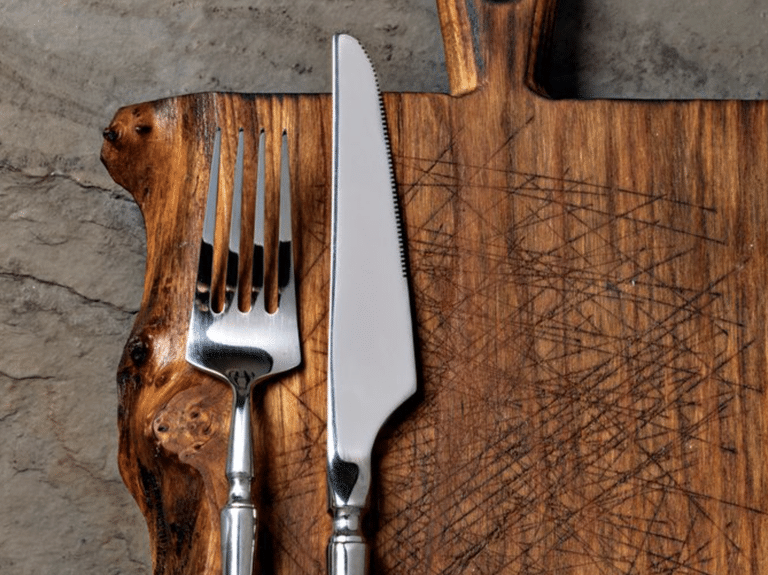
4. Deep Grooves You Can Feel With a Fingernail
Run a fingernail across the board where you usually chop. Shallow surface marks that don’t catch your nail are normal wear and tear.
Grooves deep enough to actually catch your nail are a different story. Those channels trap moisture and food debris well below what soap and a sponge can reach. If you’re at this stage, it’s worth checking our guide to replacing versus restoring before assuming it needs to be tossed.
3. Soft or Spongy Spots
Press firmly on different areas of the board with your thumb. Most of the surface should feel uniformly firm.
A spot that gives slightly under pressure compared to the rest of the board usually means water has broken down the material there, and that softened area is a magnet for bacteria.
2. Cracks That Run Below the Surface
Surface hairline marks are usually fine. A crack you can see has real depth to it, one that stays open even after the board dries, is a different category entirely.
Anything that reaches liquid and food particles down inside it, out of reach of a sponge, is generally considered a bigger risk than surface wear. Worth checking with a flashlight if you’re not sure.
1. It Never Fully Dries Between Uses
This is the one sign that overrides everything else on this list, because it usually means several of the others are already happening underneath the surface.
Stand a board upright after washing. It should feel dry to the touch within an hour or two in a normal kitchen. If it’s still damp the next morning, water is getting into the material faster than it can escape.
That trapped moisture is the root cause behind warping, softness, smell, and mold. A board that dries fast and fully is doing the most important job a cutting surface has, staying inhospitable to bacteria between meals.
This is usually where material matters most. Dense hardwood tends to wick moisture out and dry faster than laminated or particle boards, which is a big part of why a solid wood board generally outlasts the alternatives here.
At a Glance: cosmetic and safe to ignore are discoloration and minor cloudy haze. Worth watching but not urgent are shallow scoring and mild odor after wash day. Genuine replace signals are deep grooves, soft spots, visible mold, deep cracks, and a board that stays damp.
The Wrap-Up
Not every sign here means the same thing. Discoloration and minor haze are mostly cosmetic. Grooves, softness, cracks, and slow drying are the ones that actually point to contamination risk.
If your board hits two or more of the bottom four signs, that’s a genuine replace-it situation, not a wait-and-see one. For a deeper look at what makes some boards resist this kind of breakdown in the first place, our guide to what the research actually shows covers the material side in more depth.
Otherwise, a quick monthly check like this one is really all it takes to stay ahead of it. Pair it with a regular oiling routine, laid out in our complete wood cutting board care guide, and most boards on this list of signs never show up in the first place.