15 Charcuterie Board Ideas That’ll Steal the Show at Your Next Party

A charcuterie board doesn’t have to mean the same fan of salami and a wedge of brie every time. That’s a fine default, and there’s a lot more room to play.
A theme gives people something to talk about before they’ve picked up a cracker. It also makes shopping easier, since the theme does half the deciding for you.
These ideas are built around the crowd and the mood rather than a date on the calendar. Holiday-specific spreads get their own list.
We’re mixing cheap, easy ideas with a couple of real showstoppers, and we’ll say plainly which trends aren’t worth the effort.
15 ideas, counting down to the one that earns the most compliments per minute of work.
15. The Mediterranean Board
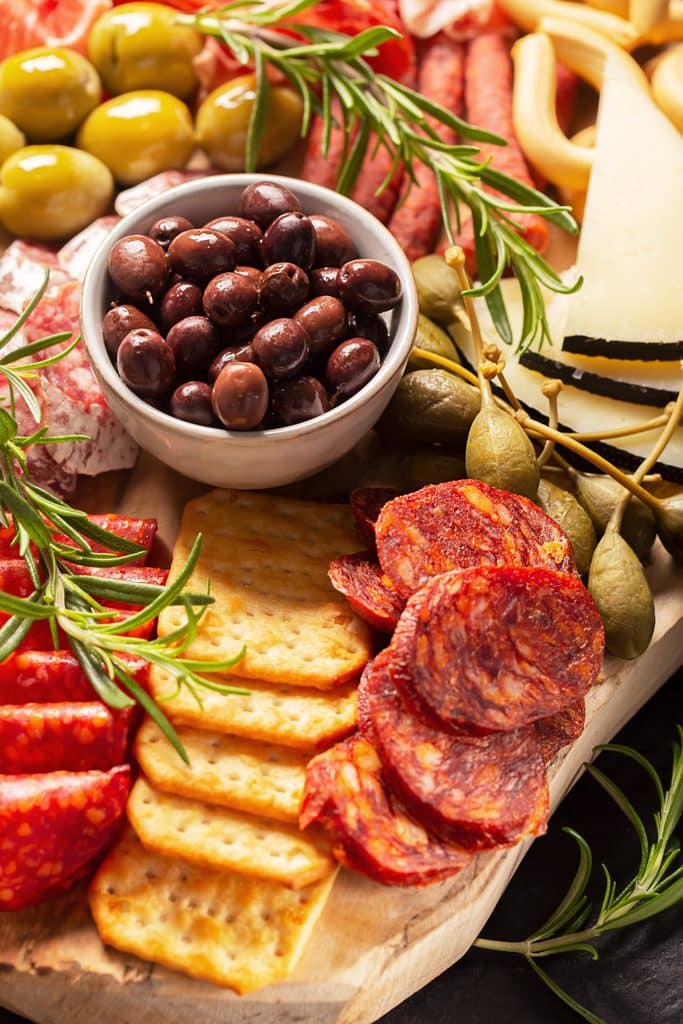
Hummus, feta, a mix of olives, warm pita triangles, roasted red peppers, and cucumber spears. It’s bright, herby, and vegetarian-friendly without anyone having to plan around it.
Most of it is sturdy at room temperature, though the hummus and feta still follow the usual guidance of about two hours out before going back in the fridge. Serve the hummus in a shallow bowl so it’s easy to swap for a fresh one halfway through.
Cluster the olives in one tight pile instead of scattering them. The deep color reads as one bold block, and marinated artichoke hearts next to them add a different texture.
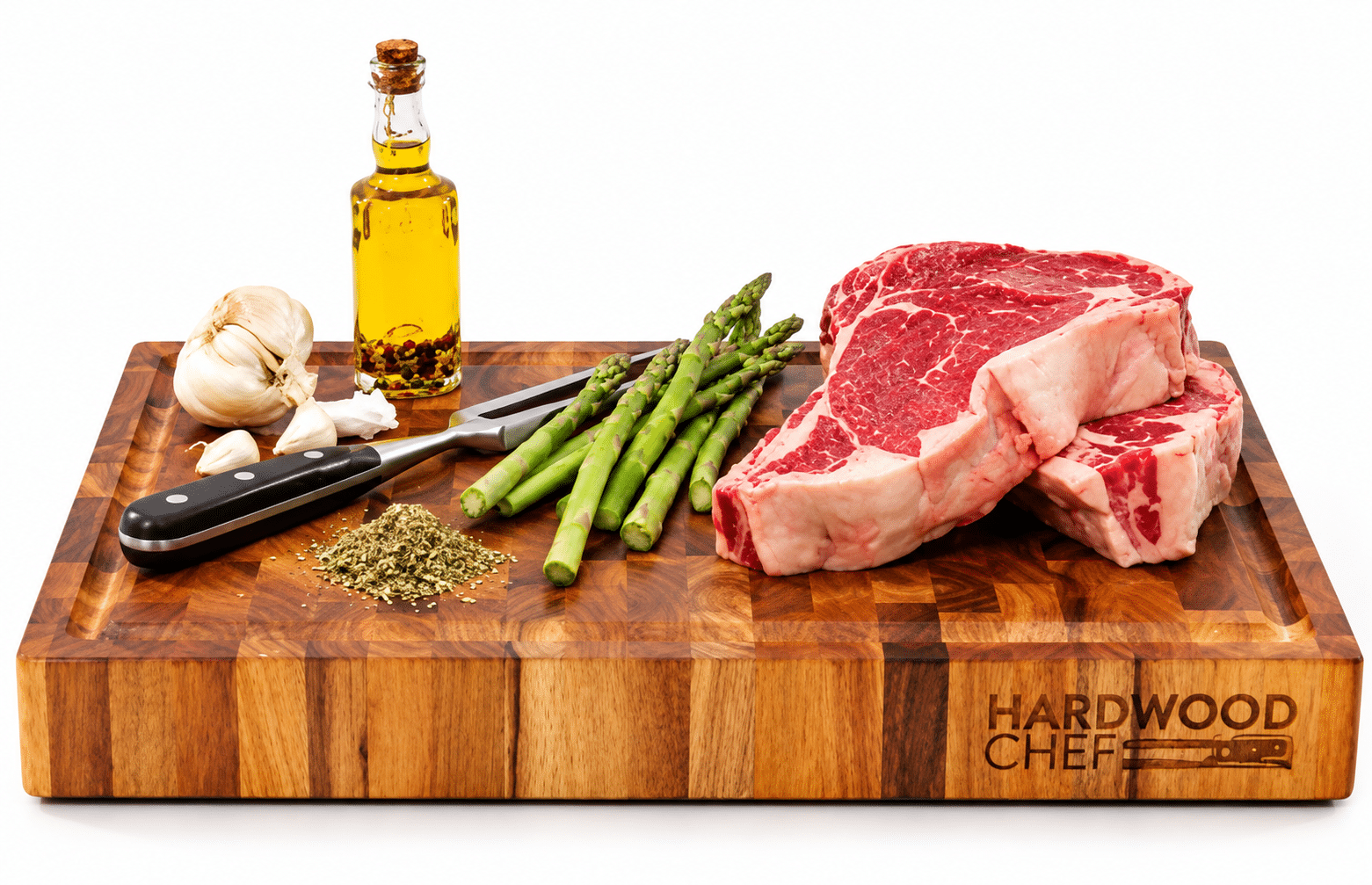
At 16 × 12 inches and nearly two inches thick, our end grain acacia board has room for a full spread of cheese, fruit, and bread, finger grips for carrying it to the table, and a juice groove for when you carve. See the board.
See the board, now $119Regularly $179 · Arrives gift-wrapped in butcher paperThe Breakdown
Effort: low
Budget: low to moderate
Best for: mixed crowds and vegetarian guests
14. The Breakfast Board
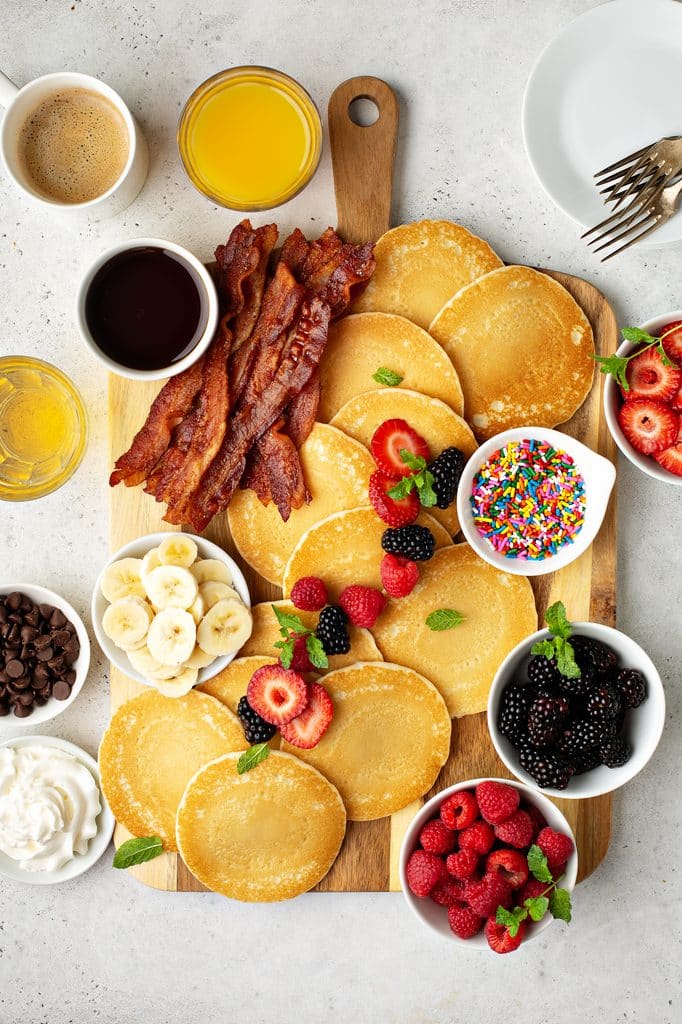
A brunch alternative to plated eggs. Mini croissants, a soft cheese, fresh berries, honeycomb, a small bowl of yogurt, and a few slices of prosciutto for a savory anchor.
The real win is timing. Everything goes out at once, so the host isn’t stuck at the stove while everyone else eats.
If you want something hot on it, a stack of mini pancakes or waffles works, as long as they go out last and get replaced in small batches.
The Breakdown
Effort: low
Budget: moderate
Best for: brunch, overnight guests, slow weekend mornings
13. The Build-Your-Own Taco Board
Not traditional charcuterie, but the board format works great here. Small bowls of salsa, guacamole, pickled onions, cotija, and lime wedges circle a pile of warm tortillas.
Keep the hot fillings in a covered dish or slow cooker beside the board rather than on it. The board holds the cold toppings, and the meat stays hot where it belongs.
Salsa and lime juice are acidic and tend to leave marks, so wipe the board down soon after the party and skip the soak in the sink. Soaking ranks high on our list of habits that wear a wood board out early.
The Breakdown
Effort: medium
Budget: low
Best for: casual crowds who like to customize
12. The All-Chocolate Dessert Board
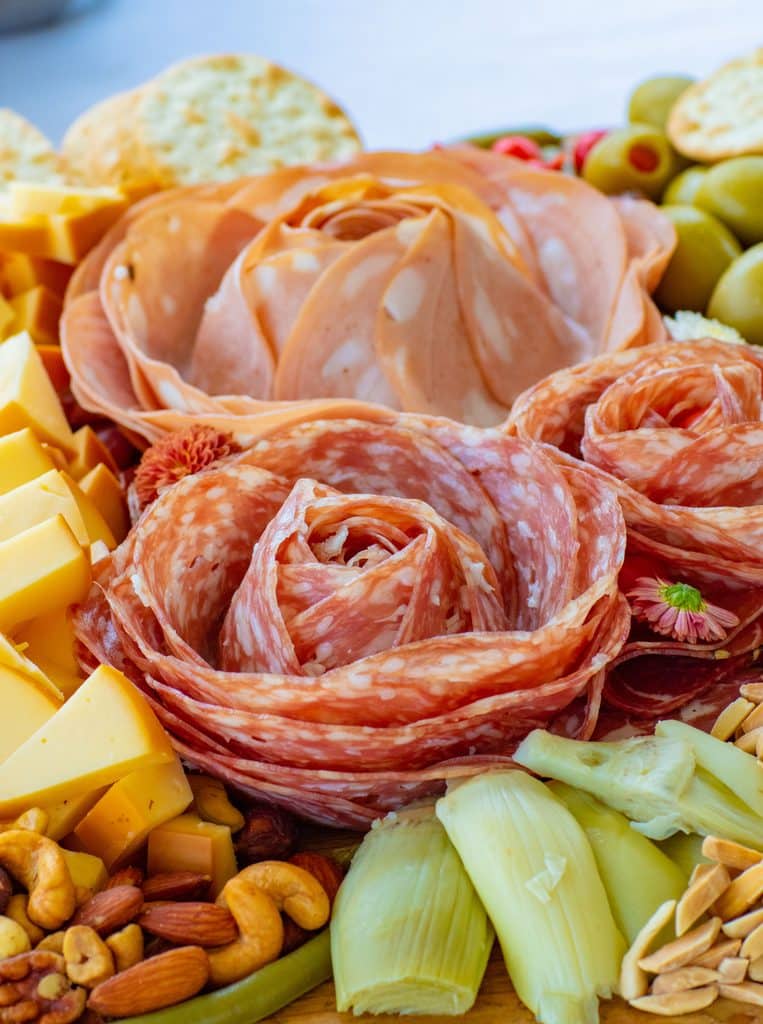
Three or four chocolates at different cacao percentages, chocolate-dipped strawberries, dried apricots, toasted hazelnuts, and a few shortbread cookies to break up the richness.
Arrange the chocolate from darkest to lightest for a gradient that takes zero extra effort. Break bars into rough shards instead of neat squares, since shards look more generous and are easier to grab.
A small bowl of flaky salt next to the darkest chocolate is the touch most people don’t expect and almost everyone tries.
The Breakdown
Effort: low
Budget: moderate
Best for: after dinner, or a dessert-only gathering
Keep Reading
If this one is your kind of read:
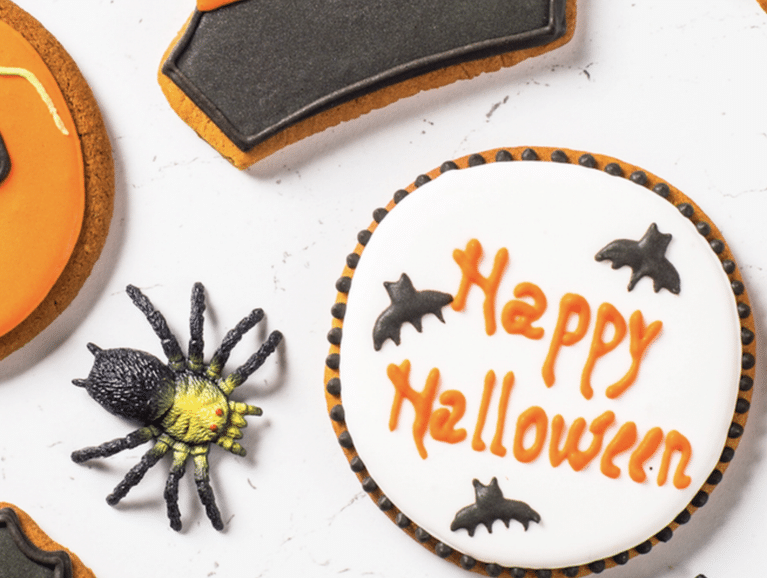
→ 21 Holiday Charcuterie Board Themes for Every Occasion
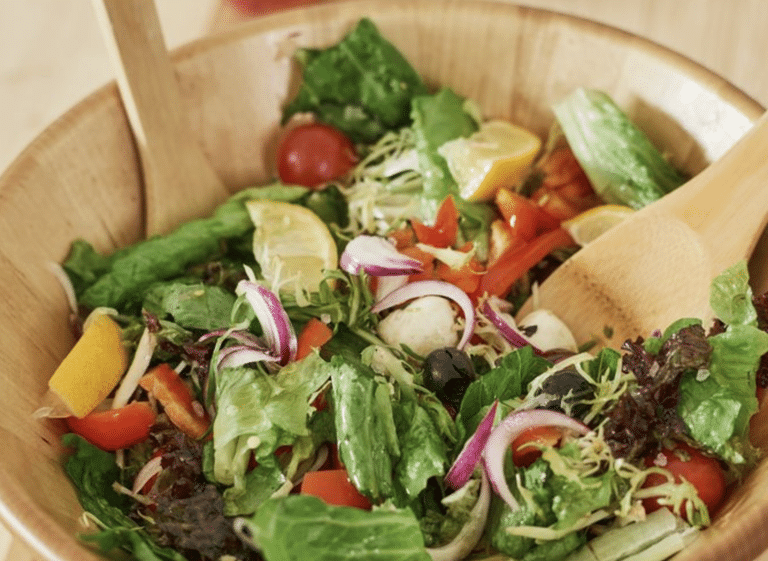
→ How to Choose the Perfect Salad Bowl: Size, Material & Style Guide
11. The Autumn Harvest Board
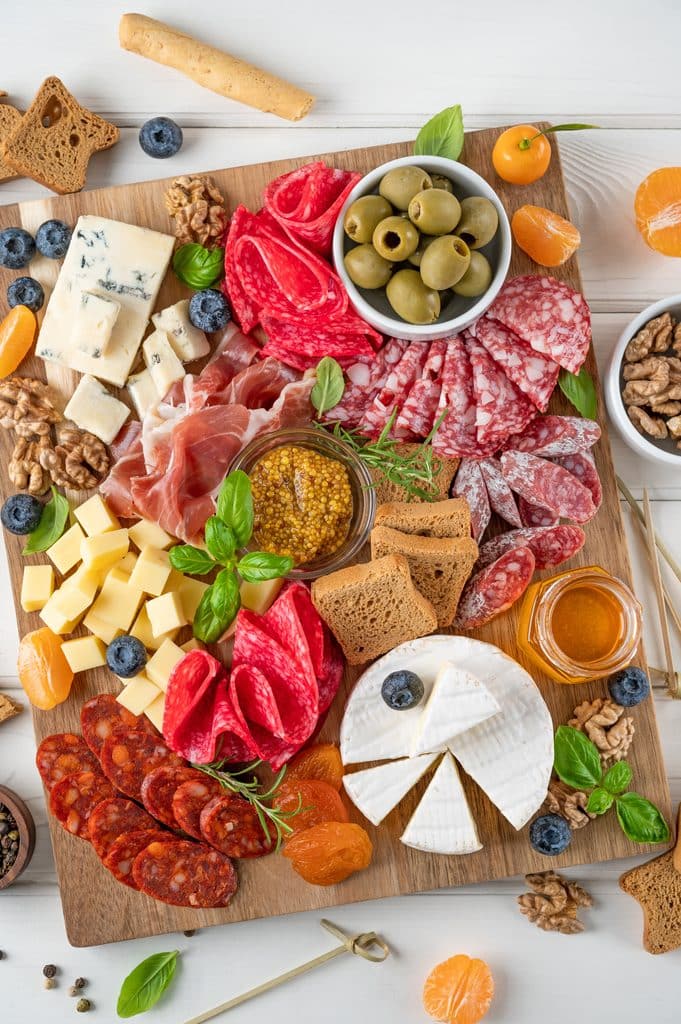
Sliced apples and pears, aged cheddar, a creamy blue, candied pecans, fig jam, and a small dish of honey. Warm tones that fit the season without tying the board to one holiday.
Toss the apple and pear slices in a little lemon juice so they don’t brown before guests arrive. A couple of cinnamon sticks or rosemary sprigs tucked between groups add a seasonal look for almost nothing.
The Breakdown
Effort: low
Budget: low to moderate
Best for: fall dinners, football Sundays, cozy nights in
10. The Cheese-Only Flight
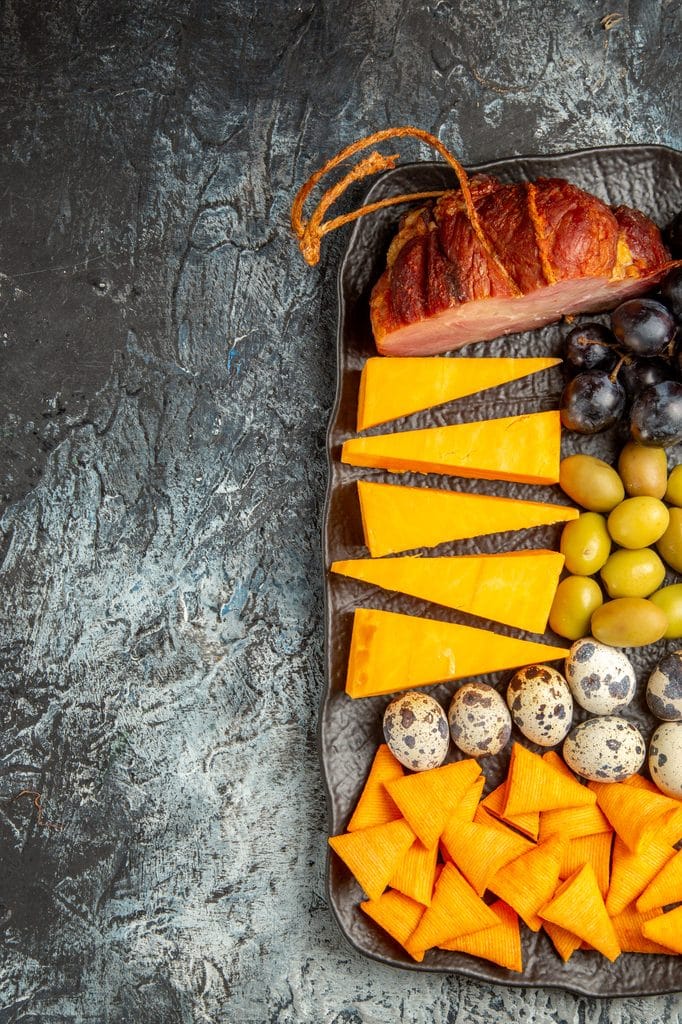
For guests who care about cheese. Four to six varieties spanning fresh, soft-ripened, semi-hard, and aged, ideally with a mix of cow, goat, and sheep milk.
Small labels are what turn a cheese plate into a tasting. Put the name and one descriptive word on each card, like nutty, funky, or buttery, and arrange them mildest to strongest.
Take the cheese out of the fridge roughly 30 to 60 minutes before serving. Cold cheese tastes muted, and flavor is the whole point here.
The Breakdown
Effort: low
Budget: moderate to splurge
Best for: wine nights and serious cheese fans
9. The Picnic Board
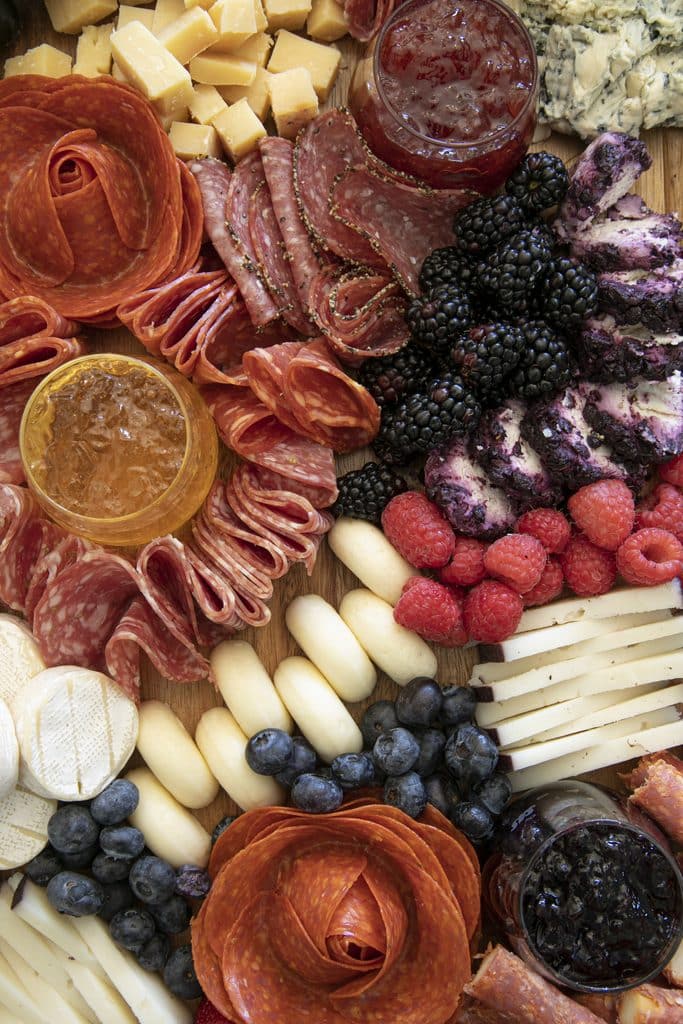
Built for the outdoors, so everything on it should handle a couple of hours without refrigeration. Hard cheeses like aged gouda or manchego, dry salami, crackers, dried fruit, and whole fruit that travels well.
Leave soft cheeses and creamy dips at home, since they’re the first things to suffer in the heat. General food-safety guidance is about two hours at room temperature, and closer to one when it’s hot out.
A real board with a beeswax wrap over it travels better than a disposable plastic tray and looks a lot nicer on the blanket. A few of our plastic-free swaps are made for exactly this kind of outing.
The Breakdown
Effort: low
Budget: low
Best for: parks, beaches, outdoor concerts
While You're Here
8 Wood Cutting Board Mistakes That Are Ruining Yours Right Now
If your wood cutting board looks tired, cracked, or a little grim after a year or two, the wood probably isn't the...
8. The Monochrome Board
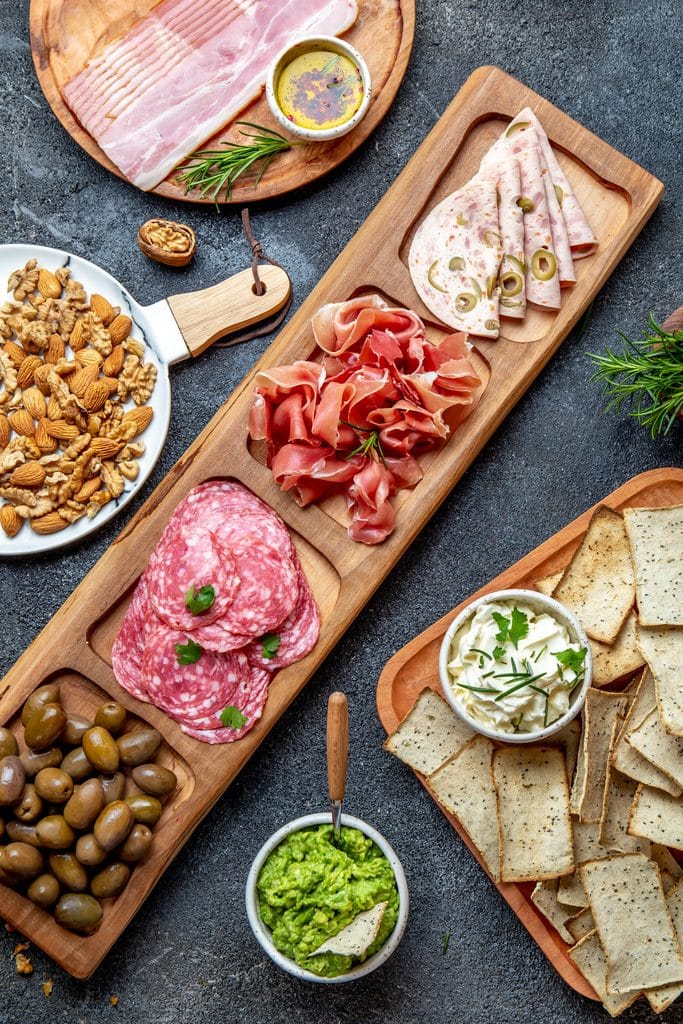
Every item in shades of one color. An all-white version might be brie, white cheddar, cauliflower, white grapes, pale crackers, and yogurt-covered pretzels.
This is the idea on the list that’s more work than it looks. Finding enough ingredients that fit the color, taste good together, and cover different textures is harder than you’d think.
It photographs beautifully, but for a casual get-together it isn’t worth the hunt. Save it for a shower or an event where the look is the point.
The Breakdown
Effort: high
Budget: moderate
Best for: showers and photo-heavy events, not weeknights
7. The Game Night Board
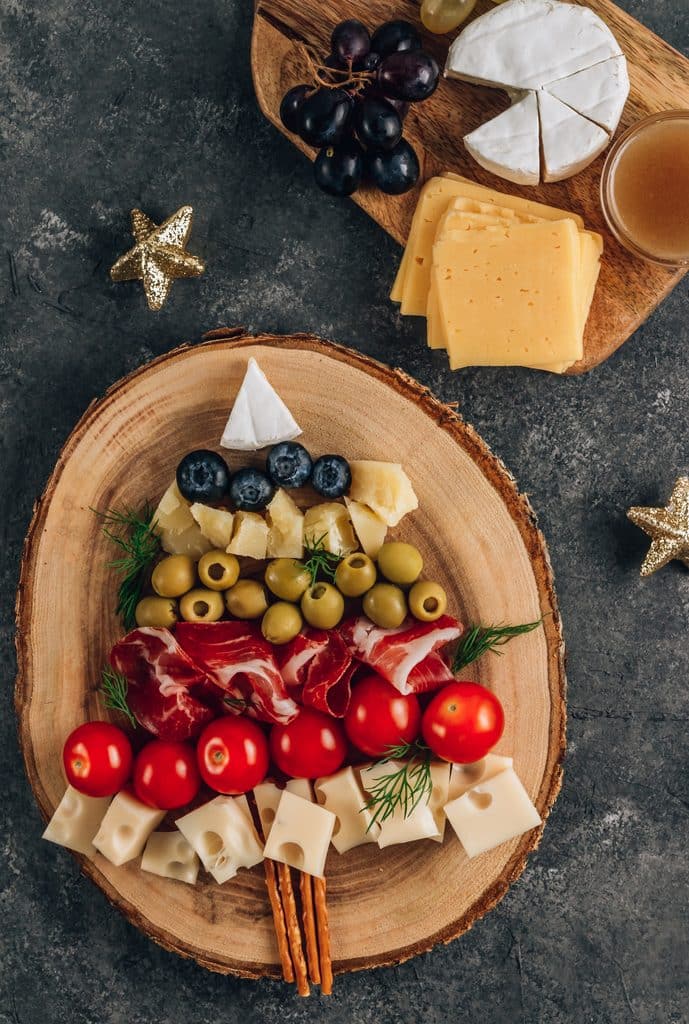
Finger food only, nothing that needs a knife or a plate. Cubed cheese, pepperoni, pretzels, mixed nuts, and grapes people can grab one-handed while holding cards.
Skip anything sticky or greasy enough to leave marks on the cards. Honey, jam, and saucy wings belong at a different party.
Toothpicks in the cheese cubes help too. It’s a small thing that keeps hands, and the game pieces, cleaner.
The Breakdown
Effort: low
Budget: low
Best for: cards, board games, trivia night
6. The Mini Individual Boards
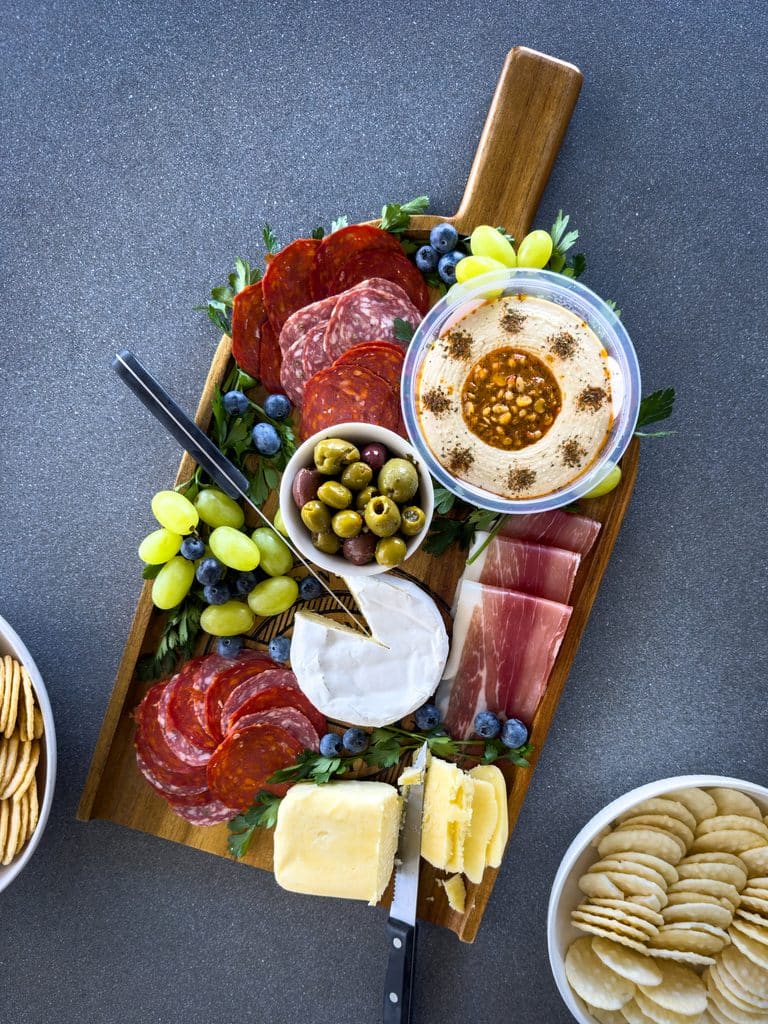
Instead of one big shared board, each guest gets a small personal board with a mini version of the same spread. It makes a seated dinner feel special without much extra cost.
Keep the components small and identical: two cheeses, one meat, a few crackers, a little fruit, and one sweet bite. Assembly goes fast once the first board is built as a template.

Jonathan grew up in New Jersey until his family moved to Germany, where he spent his youth in old-world butcher shops and French markets and learned that the best meals happen around a shared table. HardwoodChef started with one idea: make the board at the center of those moments.
Unlike plastic, it has nothing to shed into your food. Unlike glass or bamboo, its end grain is easy on your knives. And at nearly two inches thick, it’s sturdy enough to carve on and good-looking enough to serve straight from the board.
“Food brings people together. I wanted to make something worthy of sitting in the middle of it.”
Read Jonathan’s storyIt also suits guests who’d rather not share, and it fits on place settings where a big platter wouldn’t. If a salad course follows, our list of salad bowl mistakes that wilt greens early is worth a skim.
The Breakdown
Effort: medium
Budget: moderate
Best for: small seated dinners
The Insider Move: Build every board in the same order: bowls and jars first, then cheese, then meat, then the larger fruit, with the smallest fillers last. Laying the anchors down first keeps you from running out of room for the dips at the end.
5. The Spicy Board
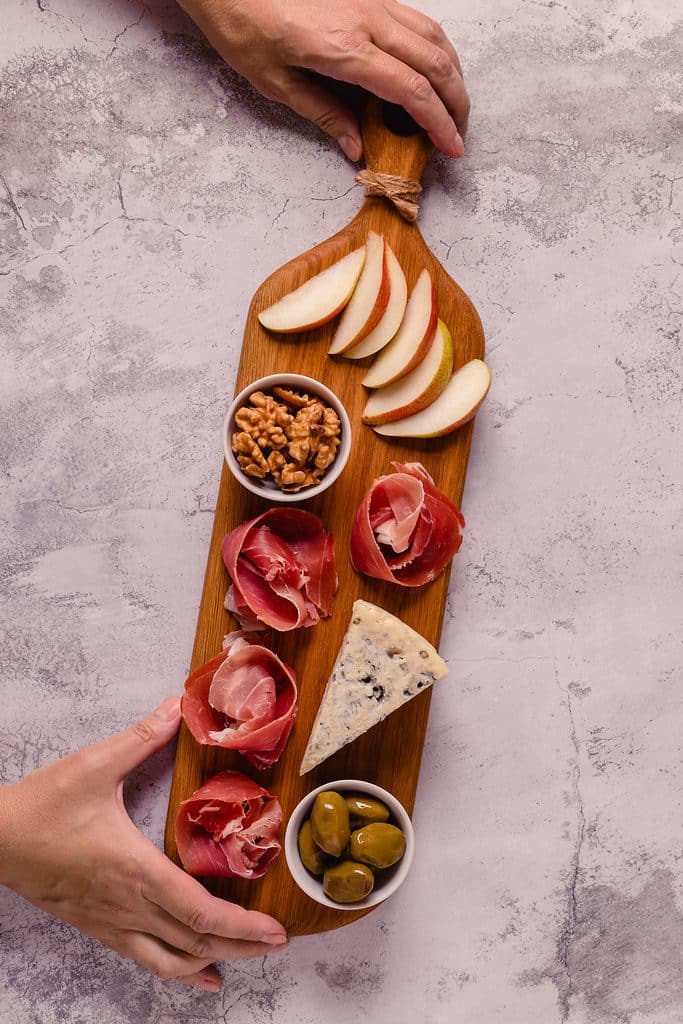
Pepper jack, spicy soppressata, candied jalapeños, a soft cheese drizzled with hot honey, and chili-spiced nuts. A fun one for a crowd that likes heat.
Keep one corner mild, with a plain cheese, regular salami, and some fruit. Not everyone wants the full burn, and a board that loses half the room isn’t doing its job.
Cooling sides help too. Cucumber slices, a yogurt dip, or a handful of grapes give people somewhere to retreat between bites.
The Breakdown
Effort: low
Budget: low to moderate
Best for: friends who treat hot sauce as a food group
4. The Wine Pairing Board
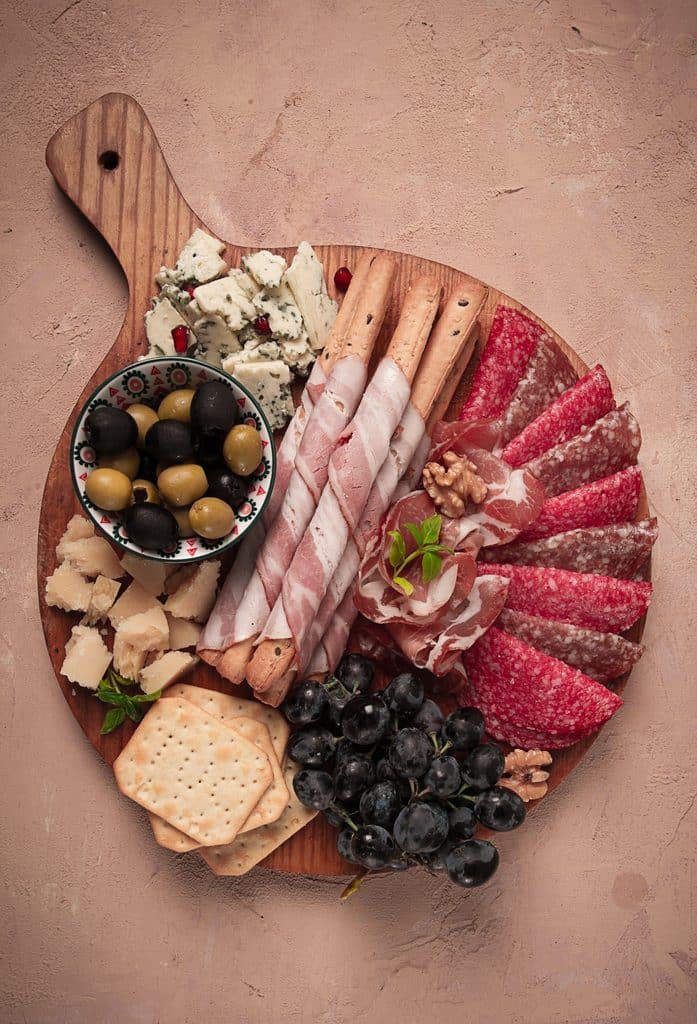
Built around one bottle instead of a generic spread, with every cheese and accompaniment chosen to go with what’s being poured.
A rough starting point: a crisp white with goat cheese and green apple, a medium red with aged cheddar and salami, or a sparkling wine with brie and salted almonds. Pick one lane and build the whole board around it.
It takes a little more thought than most boards here. In exchange, the board becomes part of the evening rather than a side snack.
The Breakdown
Effort: medium
Budget: moderate
Best for: date nights and small wine nights
Dig Deeper
The Beginner’s Guide to a Non-Toxic Kitchen, Room by Room
Most non-toxic kitchen advice throws forty things at you at once. This guide takes a different route. It goes zone by zone,...
3. The Bubbles Board
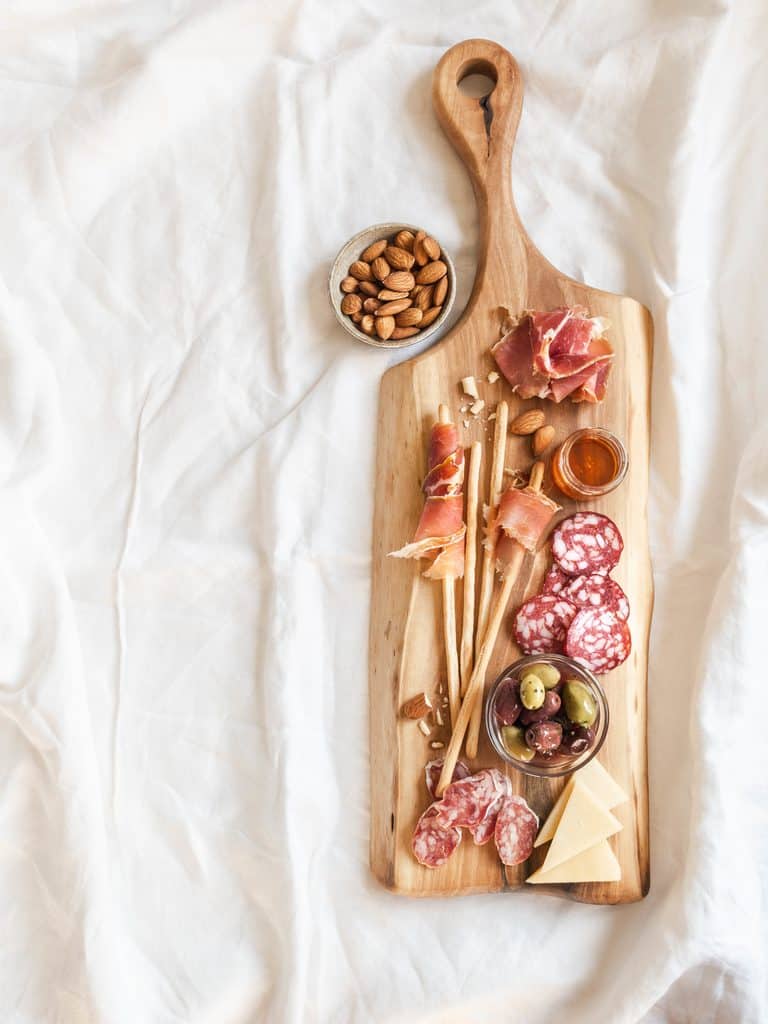
Made for anything involving sparkling wine: a promotion, an engagement, a Friday that felt longer than it was. Smoked salmon on small toasts, champagne grapes, a triple-crème cheese, dark chocolate, and a bowl of really good potato chips.
The chips aren’t a joke. Salty, crunchy food tends to pair well with bubbles, and a fancy bowl of chips on the board gets a laugh and gets eaten first.
Champagne grapes are the small touch that looks expensive without being hard to find. For date-specific versions, like a full New Year’s Eve spread, our holiday charcuterie themes cover those.
The Breakdown
Effort: low
Budget: moderate to splurge
Best for: celebrations of any size
2. The Grazing Table
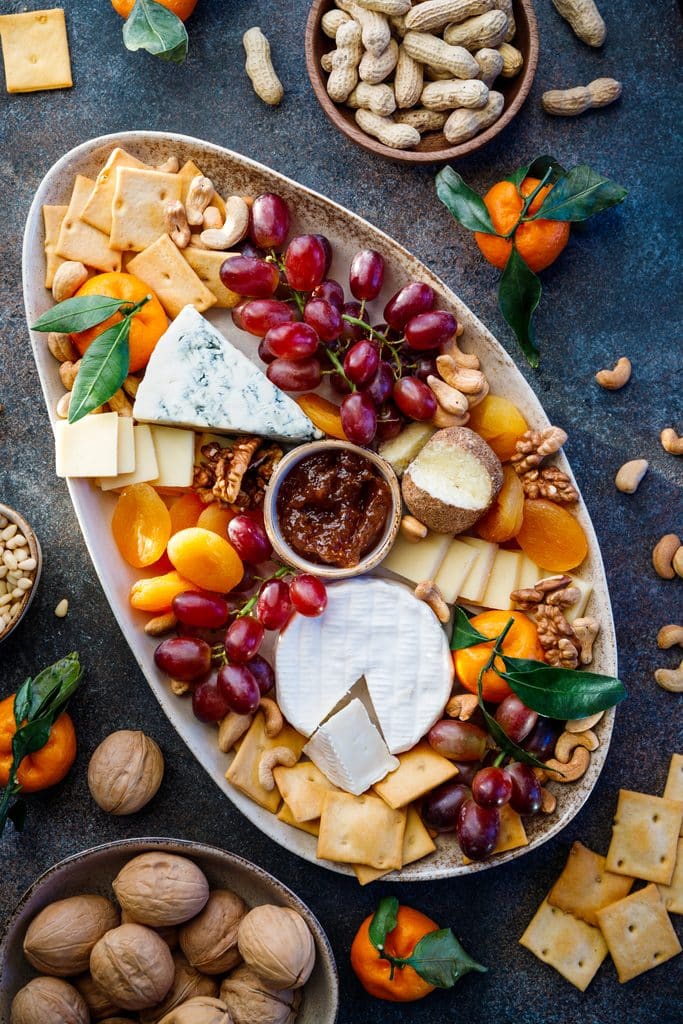
This is a board scaled up to cover a whole table, for showers, milestone birthdays, and other big gatherings. Nothing else on this list makes a bigger first impression.
It’s also the most work. It gets built directly on the table, usually over parchment or butcher paper as a food-safe base, so plan real setup time and ideally a second pair of hands.
Anchor the layout with a few large pieces first: a couple of big boards, a deep salad bowl or two, and some height from cake stands. Our guide to choosing a salad bowl covers sizing for big crowds.
The Breakdown
Effort: high
Budget: splurge
Best for: 25 or more guests
1. The Classic Board, Done Right
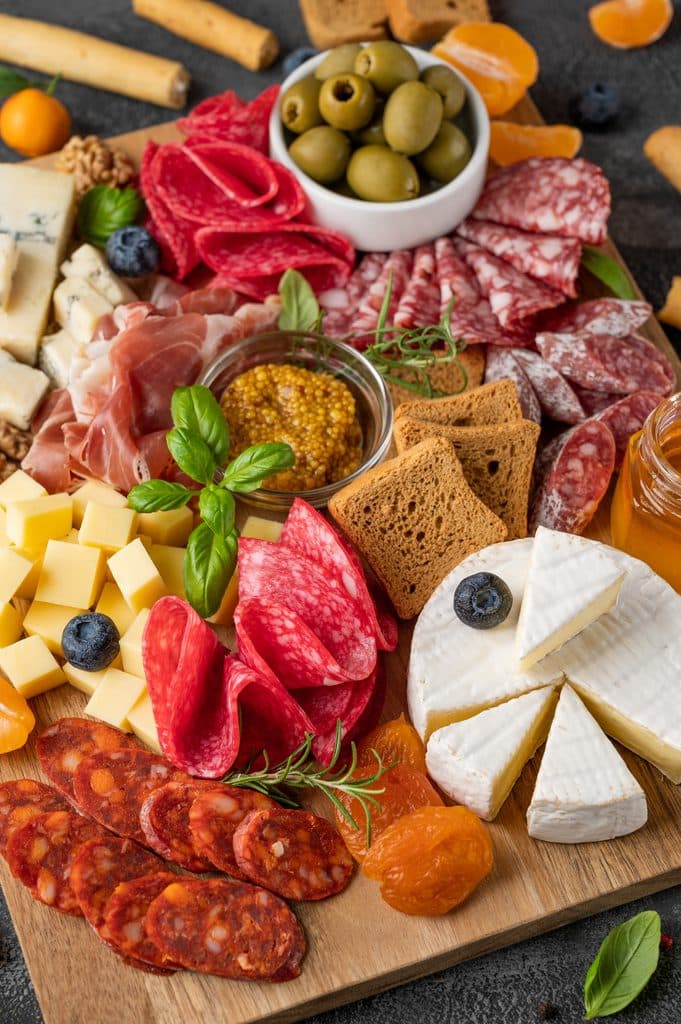
Sometimes the best idea on a list like this is the fundamentals, done well. A classic board isn’t boring when the execution is right.
Readers Can't Stop Opening These
★ Plastic-Free Kitchen Swaps: What to Replace First
★ 19 Ways to Make Your Wood Cutting Board Last a Lifetime
★ 31 Everyday Items Leaking Microplastics in Your Home Right Now
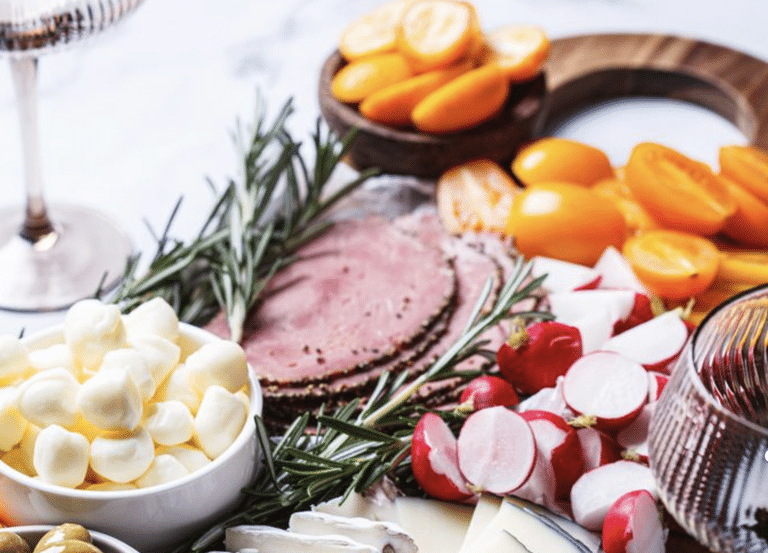
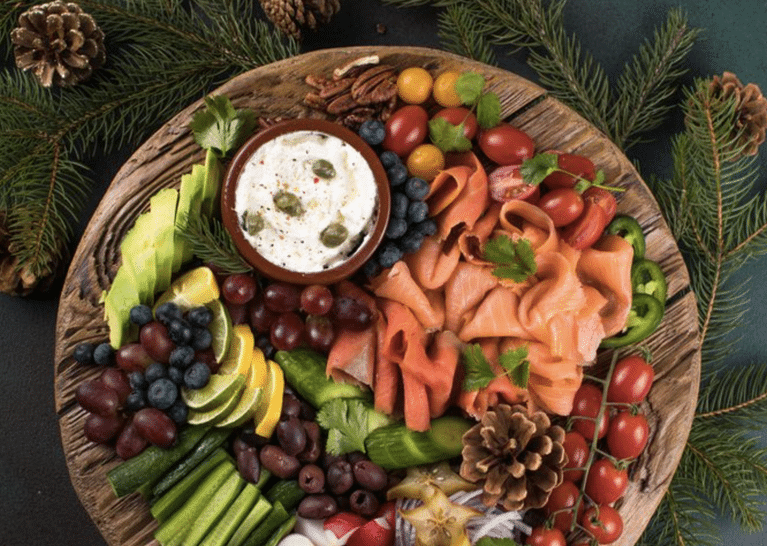
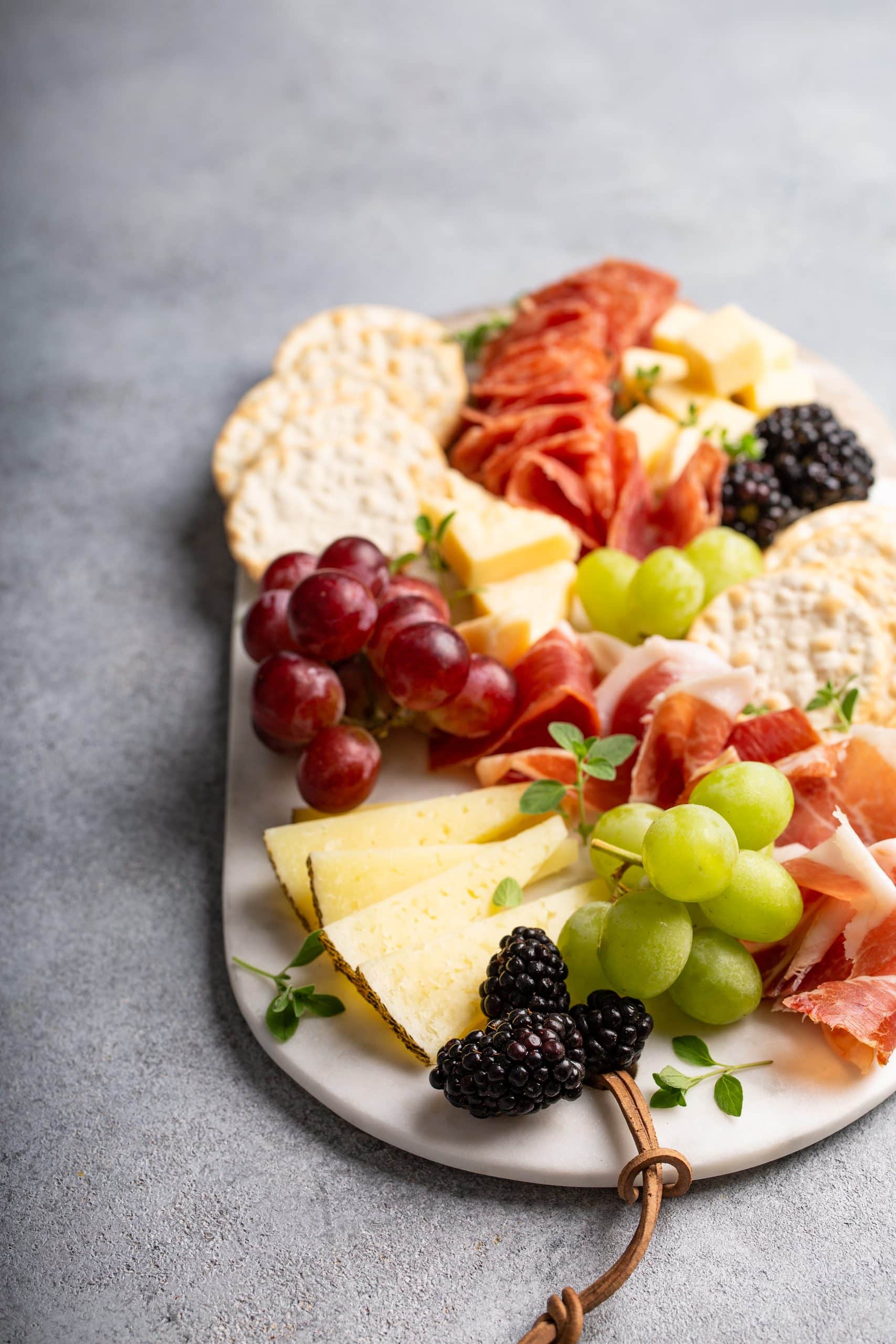
Three things separate a forgettable classic board from a great one. Texture, so the cheeses aren’t all soft; height, from folded meats and small stacks instead of everything lying flat; and color contrast, so the board doesn’t read as one beige mass from across the room.
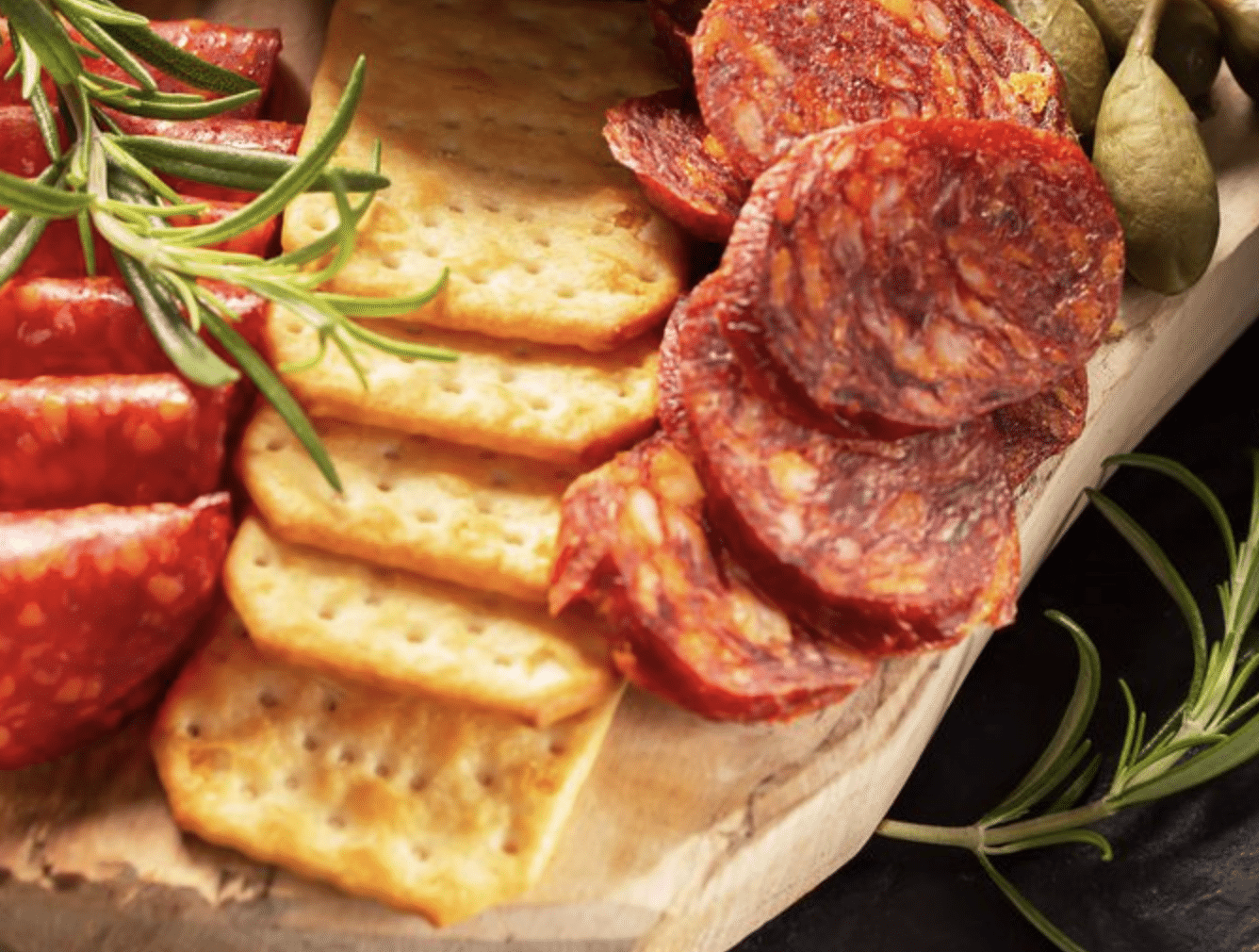
Aim for three or four cheeses with different textures, two or three cured meats, fresh and dried fruit, a jam or honey, nuts, and crackers in more than one shape. Fill every gap last with the smallest things, like olives, berries, and herb sprigs, so nothing looks sparse.
The surface matters more than people expect. A wide, solid wood board gives everything room and handles the weight of a loaded spread without flexing, and the thick acacia boards we make at HardwoodChef pull double duty as serving piece and cutting board. Our guide to choosing a board covers sizing if you’re shopping.
Learn this version first. Every themed board above is a variation on the same principles with a different palette and shopping list.
The Breakdown
Effort: low to medium
Budget: flexible
Best for: any gathering at all
Picking the Right One
Pick a theme that fits the actual gathering, not the one that looks best online. A picnic board at a formal dinner feels off, and so does a bubbles board at a casual game night.
If you only take a few things from this: master the classic board, match the theme to the crowd, and skip the monochrome board unless the photos are the point.
New to building boards? Our beginner’s guide covers ratios and layout from the ground up. And whichever board you use, our care guide keeps it looking good spread after spread.