9 Salad Bowl Mistakes That Are Wilting Your Greens Faster

A salad that’s crisp when you make it and sad twenty minutes later isn’t always about the greens themselves. A lot of it comes down to the bowl and how you’re using it.
Small habits, mostly. Easy to fix once you know what’s actually going on.
9 mistakes, counting down to the one that’s probably wrecking your salads the most.
9. Dressing Straight Out of the Fridge
Cold, thick dressing clumps instead of coating leaves evenly, which means some bites get drenched while others stay bare.
Letting dressing sit out for ten minutes before tossing lets it loosen up and spread more evenly across the greens.
8. Tossing With Two Spoons Instead of Your Hands
Spoons only reach the top layer effectively. A lot of home tossing ends up with dressed leaves on top and completely bare ones sitting at the bottom.
Clean hands, or salad tongs that actually reach the bottom of the bowl, coat everything more evenly than a couple of spoons pushing greens around the surface.
7. Using a Bowl That’s Too Shallow
A shallow, wide bowl doesn’t give greens room to actually move around when you toss. Everything just gets pushed flat against the sides instead of tumbling.
A deeper bowl gives leaves the room to actually turn over during tossing, which is most of what even dressing coverage depends on.
6. Dressing the Salad Too Early
Salt and acid in most dressings start breaking down leaf structure almost immediately. A salad dressed twenty minutes before serving is already wilting by the time it hits the table.
Dress right before serving, always. It’s the single highest-impact timing fix on this entire list.
5. Storing Undressed Greens in the Same Bowl You’ll Serve From
Prepping greens ahead and leaving them sitting in the serving bowl, even undressed, exposes them to air and any residual moisture in the bowl longer than necessary.
Store prepped greens in a sealed container with a paper towel to absorb moisture, and move them to the serving bowl only right before dressing.
4. Not Drying Greens Thoroughly Before They Go in the Bowl
Wet leaves dilute dressing and make it slide off instead of clinging, which leaves you with a puddle at the bottom of the bowl instead of evenly coated greens.
A proper spin in a salad spinner, or a thorough pat-down with a towel, matters more than most people give it credit for.
3. Using a Porous Bowl for Acidic Dressings
Some materials absorb lingering acid and oil from dressing over repeated use, which can affect flavor in future salads and shorten the bowl’s usable life.
A dense, well-sealed wood bowl or a non-porous material like stainless or glass handles repeated acidic dressing contact without absorbing it into the material the way a more porous surface can. Our material comparison guide covers this same tradeoff for cutting boards, and the same reasoning applies here.
2. Overcrowding the Bowl
Piling every ingredient into a bowl that’s sized for half the volume means there’s no room for anything to actually move during tossing.
If you’re regularly making salads for a group and packing a bowl to the brim, sizing up to a genuinely large bowl solves this more effectively than any tossing technique can compensate for, especially if salad is sharing table space with a full charcuterie spread and needs to hold its own visually.
1. Using the Same Small Bowl for Everything, Regardless of Size
This is the root cause behind several other mistakes on this list, and it’s worth calling out directly instead of treating it as just another item.
A lot of kitchens have exactly one salad bowl, sized for whatever the household usually needs. When a bigger group shows up, that same undersized bowl gets used anyway, which means overcrowding, uneven tossing, and greens that wilt faster simply because there wasn’t room to properly coat them.
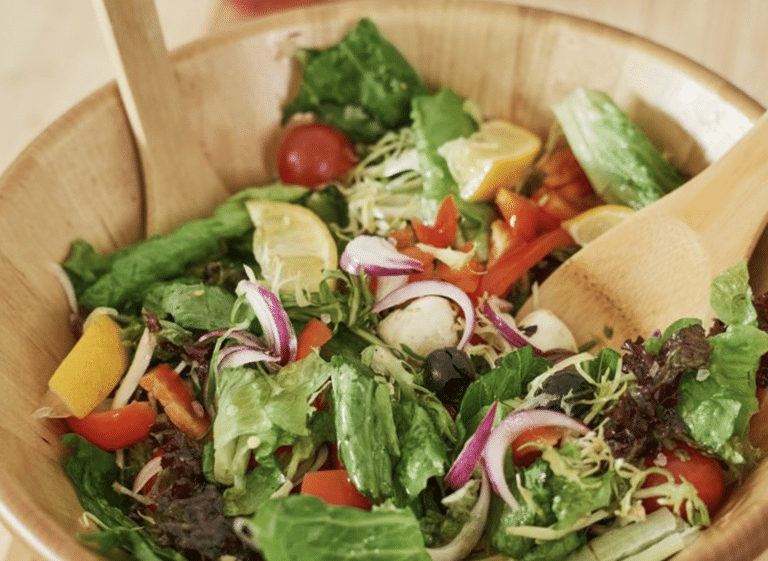
The fix isn’t complicated: match bowl size to the actual portion. A deep, generously sized wood bowl, roughly big enough to hold twice what you think you need, gives greens room to tumble properly during tossing, which is most of what keeps a salad from wilting in the first place.
Depth matters here as much as width. A wide, shallow bowl looks nice but doesn’t actually solve the tossing problem the way a deeper bowl does, even at the same overall volume. It’s the same depth-over-width principle that applies to building a charcuterie board too, room to work matters more than surface area alone.
Where to Go From Here
None of these fixes cost anything except a small habit change, aside from the bowl-sizing one, and even that’s a one-time fix rather than an ongoing cost.
If you’re in the market for a bowl that actually solves the depth and material issues covered above, our guide to choosing a salad bowl walks through sizing and material in more detail. And once you’ve got one, a wood bowl follows roughly the same care routine as a wood cutting board, our complete care guide covers the oiling and cleaning basics.