How to Choose the Perfect Salad Bowl: Size, Material & Style Guide

Salad bowls don’t get the same buying-guide attention cutting boards or cookware do, which is a little odd given how often the wrong one causes real problems, wilted greens, cramped tossing, a bowl that never quite fits the counter.
Here’s what actually matters when picking one, whether it’s for weeknight dinners or a table that also includes a full charcuterie spread.
Size: Match It to How You Actually Serve
The most common mistake is buying a bowl sized for a household of two and then using it for every gathering, including the ones with eight people over.
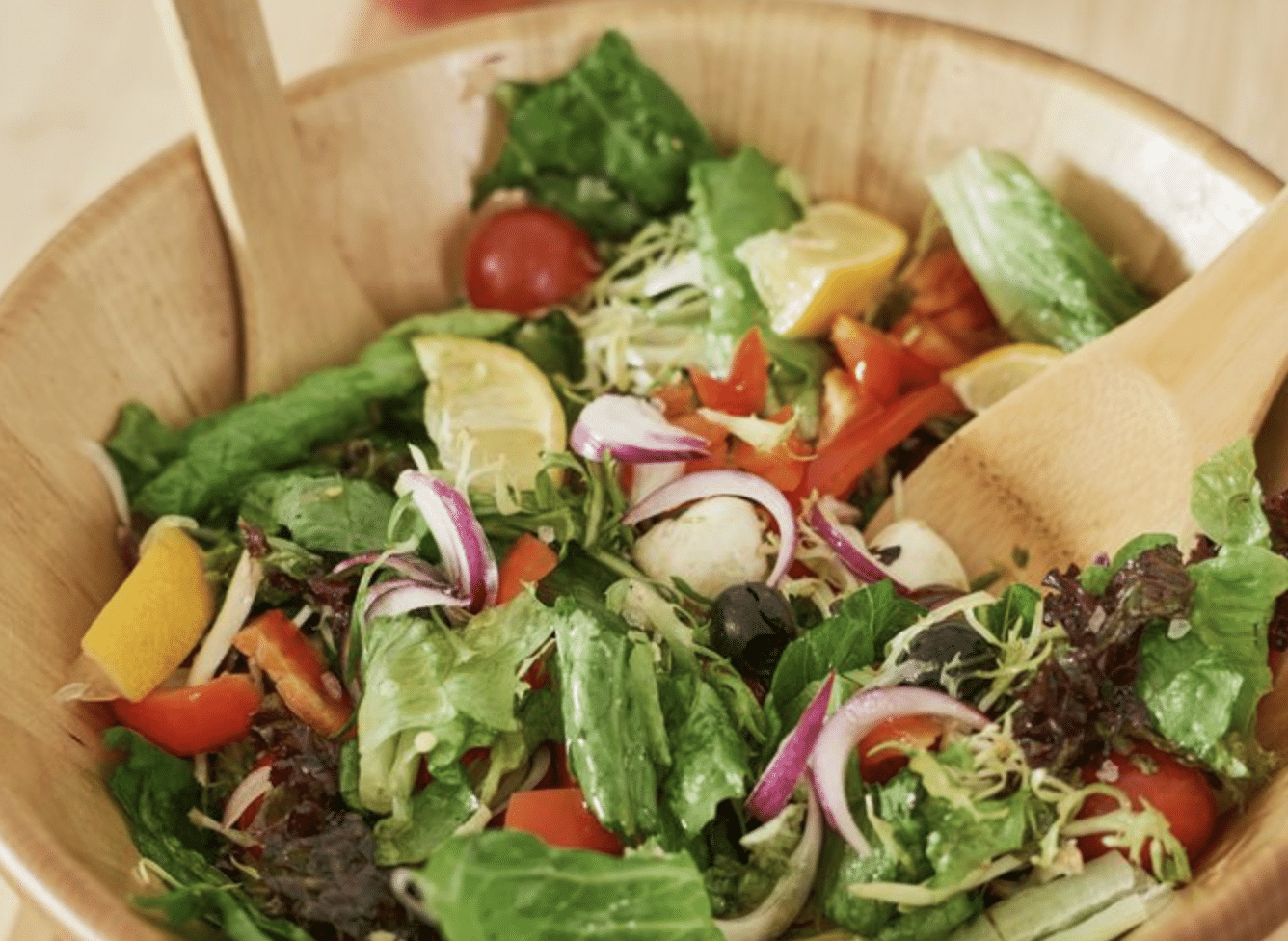
For everyday personal or two-person use, something in the 8 to 10 inch diameter range is usually enough. For regular household salads serving three or four, look toward 11 to 13 inches. For entertaining and larger gatherings, 14 inches or more gives greens genuine room to move during tossing, which matters more than people expect for even dressing coverage.
If you only own one bowl and host occasionally, size up rather than down. A large bowl handles a small salad fine. A small bowl handling a large salad is where most of the wilting and uneven-dressing complaints actually come from.
Depth Matters as Much as Width
A wide, shallow bowl looks appealing on a table but doesn’t give leaves room to tumble the way a deeper bowl does, even at a similar overall volume.
If tossing evenness is a priority, favor a bowl with real depth over one that’s mostly wide and flat, even if the flat version photographs better.
Material Trade-Offs
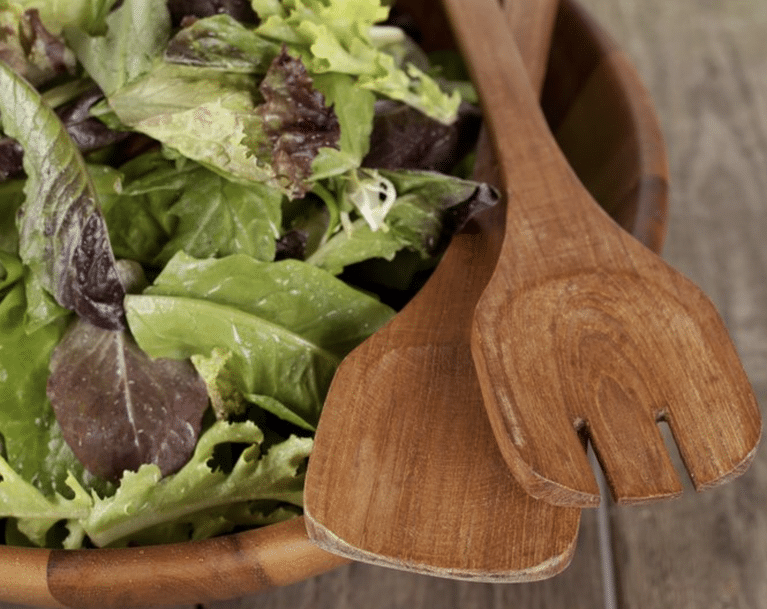
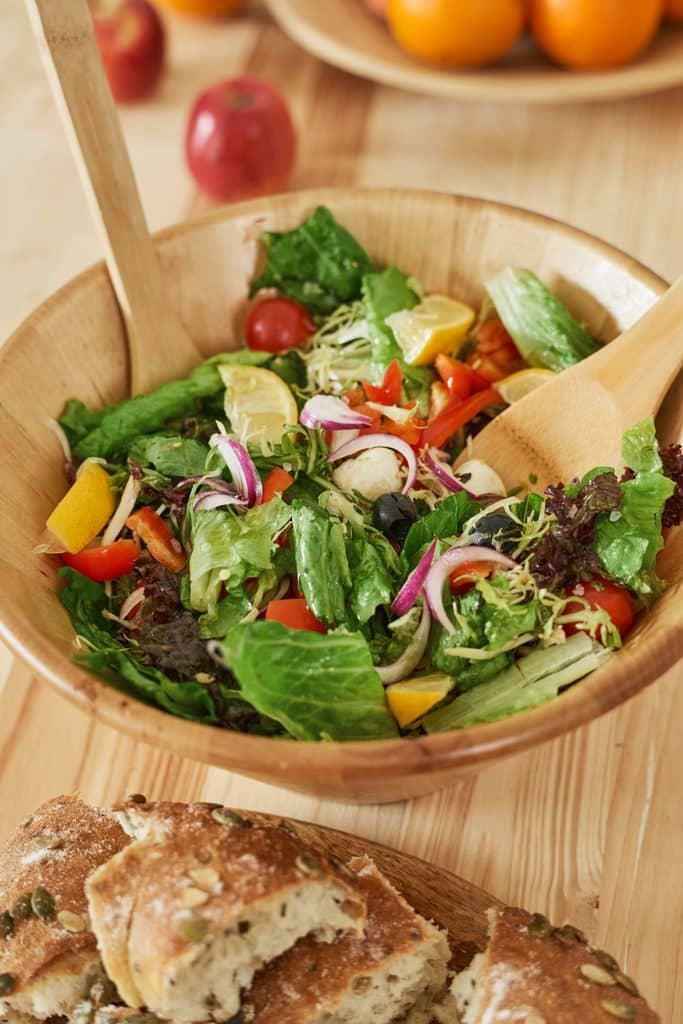
Wood: doesn’t absorb odors from acidic dressings the way some materials can when well-sealed, and it has a warmth that suits everyday use and entertaining alike. It needs occasional oiling and shouldn’t go in the dishwasher, similar care to a wood cutting board, and our care guide for wood cutting boards covers a routine that transfers well to a wood bowl too.
Ceramic or stoneware: heavier, doesn’t absorb anything, and comes in the widest range of colors and styles. The tradeoff is fragility, a dropped ceramic bowl doesn’t survive the way wood or metal generally does.
Stainless steel: essentially indestructible and easy to clean, though it reads as more utilitarian than decorative and isn’t everyone’s preferred look for a table setting.
Plastic: the cheapest and lightest option, but it scratches and clouds with repeated use, and those scratches can hold onto odors from acidic dressings over time in a way the other materials generally don’t.
Style: Everyday vs. Entertaining
If you’re buying one bowl to cover both everyday meals and occasional entertaining, a natural wood tone tends to fit the widest range of table settings without clashing, casual weeknight dinner or a dressed-up gathering.
If you’re buying specifically for entertaining and already have a everyday bowl covered, this is where a bolder ceramic color or pattern can make more sense, since it’s not competing with daily practicality concerns. Pairing a good bowl with a solid spread is worth planning together, our beginner’s guide to charcuterie boards covers the rest of the table.
Putting It Together
For most households buying a single bowl to cover both everyday use and occasional entertaining, a deep, mid-to-large wood bowl in the 12 to 14 inch range is a reasonable default. It handles the tossing-room and material concerns covered above, and it fits comfortably into most table settings without needing to match a specific decor style.
That’s the general profile of the salad bowls we build at HardwoodChef, sized and shaped around these same tossing and durability considerations.
Whatever you land on, our list of common salad bowl mistakes is worth a read once you’ve got your bowl, since even the right bowl won’t fix a few of the habits covered there.